Finding tufts of fur on the couch is one thing. Finding a bald patch on your cat’s belly or a thin spot behind their ears is another matter entirely. If you’re staring at your cat right now trying to figure out if what you’re seeing is normal or a reason to worry, you’re not alone, and there’s a reasonably clear way to tell the difference.
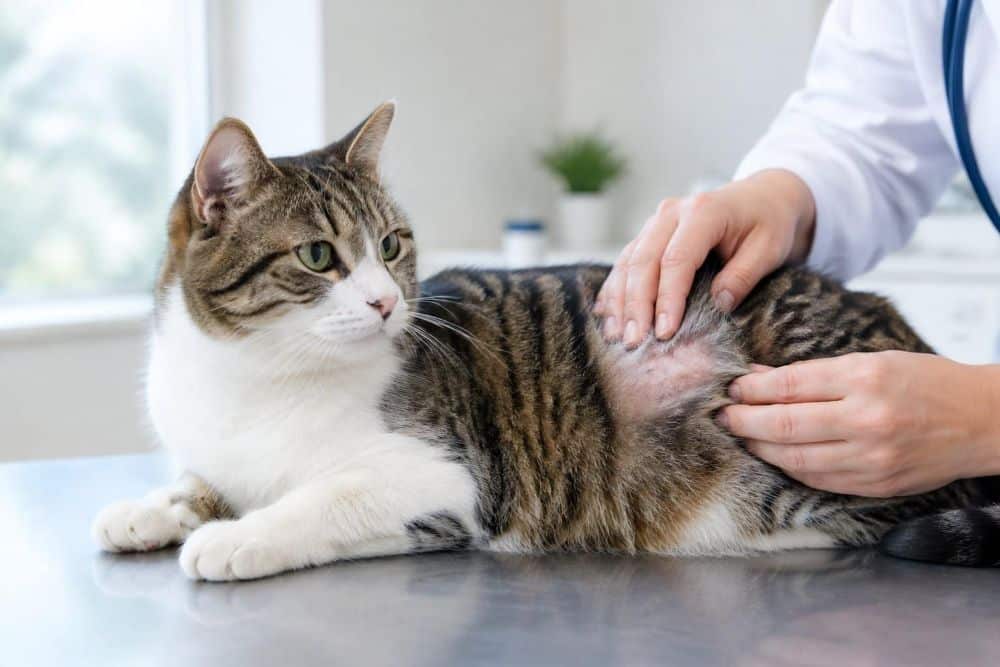
A cat losing hair usually points to one of a handful of common culprits: fleas, allergies, stress, ringworm, or an underlying medical issue. Normal shedding of cat hair↗ spreads evenly across the whole coat and never leaves bare skin behind, while true hair loss shows up as patches, thinning spots, or skin you can suddenly see through the fur.
The distinction of cat hair loss matters because patchy hair loss is a symptom of something else going on, and figuring out what that something is tends to go better with a methodical look at the pattern, the skin underneath, and any other symptoms your cat is showing.
This piece walks through how to spot the difference, what’s commonly behind bald patches and thinning fur, and the point at which a phone call to your vet is worth making.
Is It Normal Shedding or Hair Loss?
Normal shedding is a whole coat event. Hair loss, or feline alopecia, is localized, patchy, or leaves skin visibly exposed, and it’s never something to write off as “just shedding season.”
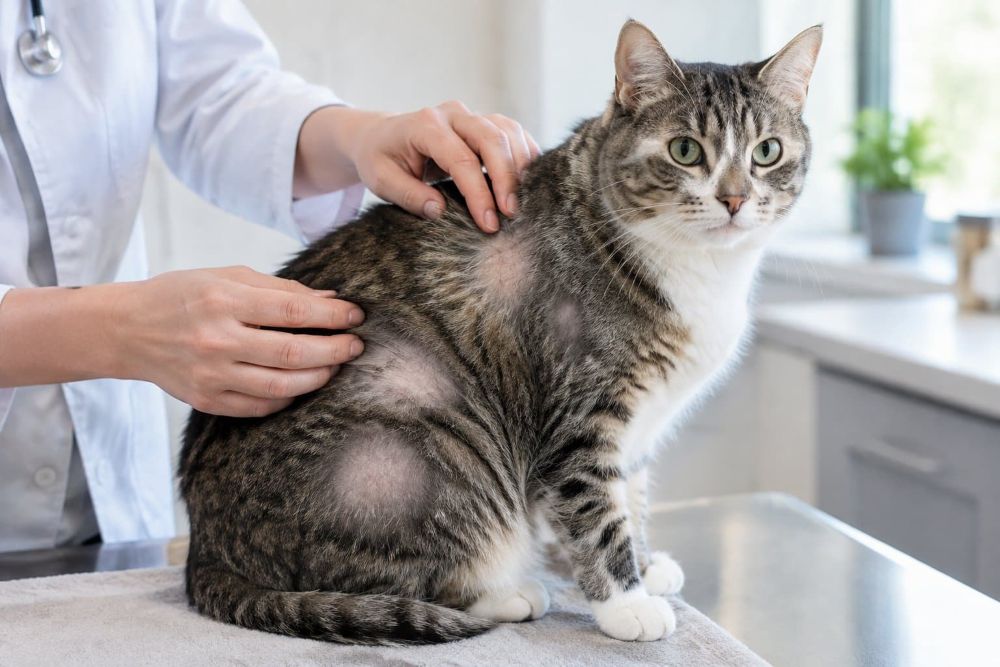
How Can You Tell Shedding from Bald Patches?
Cats shed year round, with heavier bursts in spring and fall as the coat adjusts to temperature changes. This is evenly distributed, affects the whole body, and only removes hairs that have already finished their growth cycle.
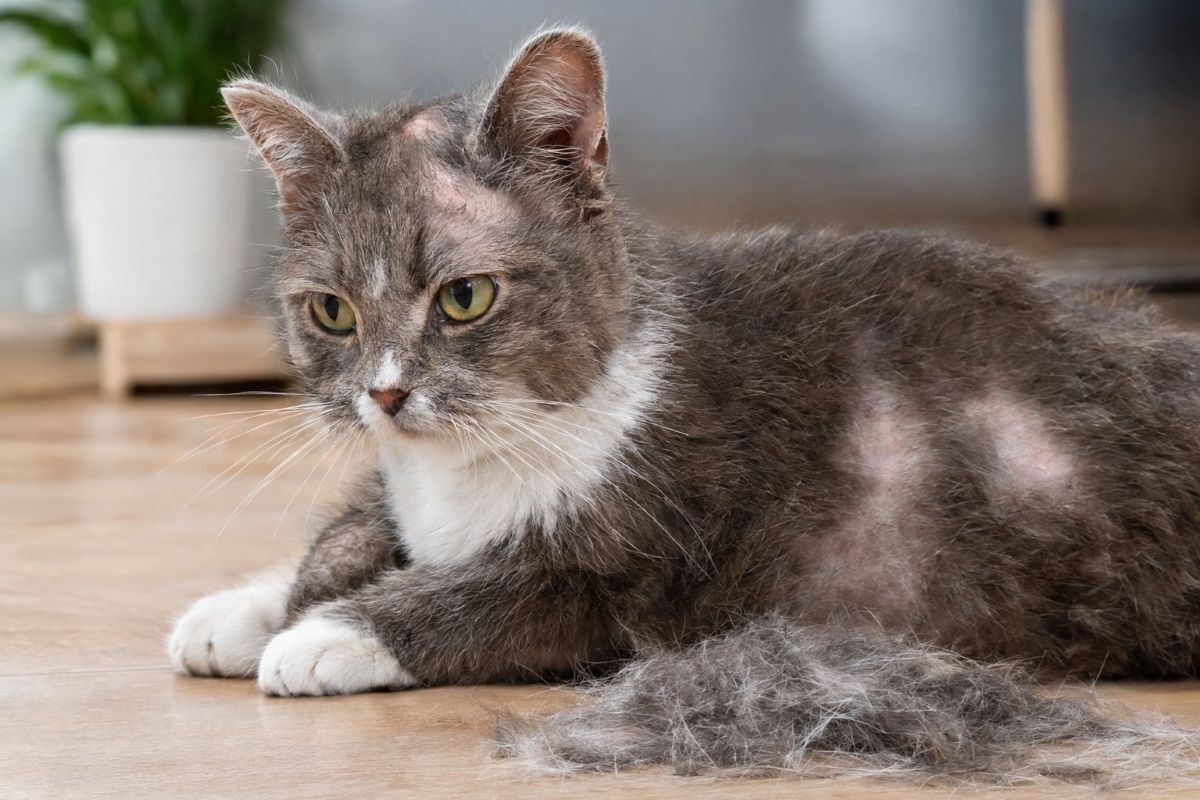
Hair loss looks different. You’ll notice:
- A patch where you can see pink or pale skin through thinned fur
- Fur that looks “shaved” or stubbly rather than missing, often from overgrooming
- Hair loss concentrated on one area: the belly, legs, or around the ears
- Bald spots with a defined edge or circular shape
If brushing your cat produces a normal amount of loose hair and the coat still looks full everywhere, that’s shedding. If you can trace the outline of a bald spot, that’s hair loss in cats worth paying attention to.
What Can the Skin and Hair Tell You?
The skin underneath a bald patch carries real clues. Healthy, normal shedding skin looks smooth and uniform. Skin under a problem area might show redness, scabs, flaking, or small bumps.
Run your fingers against the grain of the coat near any thin spot. Flea dirt looks like small dark specks that turn reddish brown when wiped on a damp paper towel, a sign worth checking given how often fleas drive cat hair loss.
Dry, circular, scaly patches can point toward dermatophytosis (ringworm). Hair that looks cut short rather than missing usually means your cat has been licking the area raw, a pattern groomers and vets call overgrooming.
What Can Cause Bald Patches or Thinning?
Several common conditions drive causes of hair loss in cats, ranging from parasites you can spot with the naked eye to conditions that need lab testing to confirm. Fleas, mites, allergies, ringworm, overgrooming, and underlying illness account for the large majority of cases vets see.
Fleas, Mites, and Flea Allergies
Fleas are the most common trigger for itching and hair loss in cats, even in cats that never go outside. Flea dirt (tiny dark specks in the coat) is often the first visible sign, though some cats with flea allergy dermatitis react so strongly that a single bite causes weeks of itching without an active infestation ever being obvious.
Ear mites cause head shaking, dark discharge in the ear canal, and hair loss around the base of the ears from scratching. Other mites, grouped under the term mange, cause intense itching and can be contagious between animals.
If fleas keep coming back despite treatment, it’s worth reviewing how you’re treating fleas↗, since not every product targets every life stage of the parasite.
Food and Environmental Allergies
Allergic reactions to food proteins, pollen, dust, or mold cause itching that leads cats to overgroom the face, neck, belly, and legs. The hair loss itself isn’t the direct effect of the allergy, it’s damage from the scratching and licking the allergy provokes.
Food allergies typically take weeks to resolve even after a diet change, since it takes time to clear the trigger ingredient from a cat’s system.
Ringworm and Other Skin Conditions
Ringworm is a fungal infection, not an actual worm, and it’s highly contagious to other pets and to people in the household. Classic signs include a roundish, scaly patch, often on the head, ears, or front legs, where the hair looks broken rather than smoothly missing.
Bacterial infections and abscesses, often from bite wounds or scratches, also cause localized hair loss, usually with swelling, discharge, or an area too painful to touch.
Overgrooming from Itch, Pain, or Stress
Psychogenic alopecia describes hair loss from compulsive licking tied to stress or anxiety rather than a skin problem. It tends to show up on the belly, inner thighs, or front legs, with the remaining hair looking clipped short rather than patchy or scabbed.
Pain drives the same behavior. A cat with arthritis might lick over a sore joint, a cat with a bladder issue might overgroom its belly or groin. Big changes at home, like a new pet or a move, can also trigger stress licking, and the piece on cat hiding after moving to a new home↗ covers other stress signals worth watching for alongside it.
Underlying Illness and Less Common Causes
Hormonal conditions like hyperthyroidism or, less commonly, Cushing’s disease can cause a dull coat, thinning fur, or fragile skin that tears or loses hair easily. These conditions show up more in middle aged and older cats and usually come with other signs like weight changes or increased thirst.
Rarer causes include sebaceous adenitis (an inflammatory condition affecting the oil glands in the skin), autoimmune disease, and certain medications. Pregnant or nursing cats also shed more around the belly due to hormone shifts, which typically resolves on its own after weaning.
When Should You Call the Vet?
Any new patch of hair loss is worth a veterinary opinion, since true alopecia in cats is rarely something that resolves without identifying the cause. Some situations call for a routine appointment; others need same-day attention.
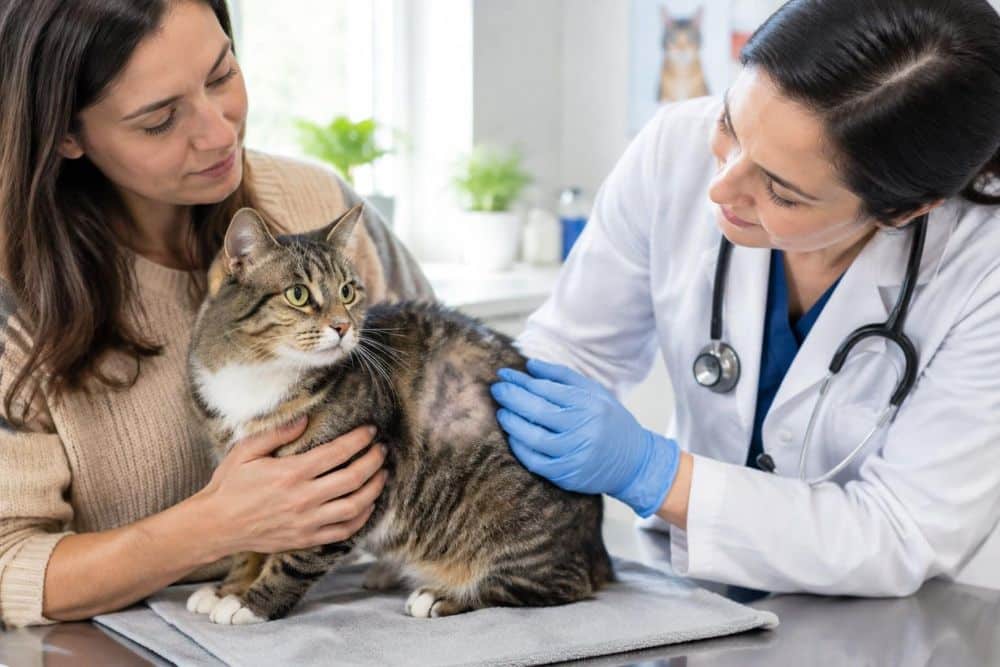
Which Changes Need a Veterinary Appointment?
Book a visit if you notice a bald patch that wasn’t there a few weeks ago, hair that pulls out easily in clumps, or skin changes like redness, scabbing, flaking, or discoloration under the thinning fur. A cat that’s licking, scratching, or chewing at one spot more than others is telling you something’s bothering them, even if the behavior looks mild.
Gradual thinning in an older cat, especially paired with weight loss, a scruffy coat, or increased appetite, deserves a checkup too, since it can point toward a thyroid or other hormonal issue. If you’re unsure how often routine visits make sense in general, the guide on how often to take your cat to the vet↗ is a useful baseline.
Which Symptoms Need Urgent Attention?
Get seen sooner if hair loss comes with an open wound, swelling, discharge, or a smell coming from the skin, since these point toward infection. Straining to urinate, blood in urine, or a painful abdomen alongside belly licking needs same day care, as these can signal a urinary blockage, which is an emergency in cats.
A cat that suddenly stops eating, hides constantly, or seems lethargic in addition to losing hair needs prompt evaluation rather than a wait-and-see approach.
How Will the Cause Be Found and Treated?
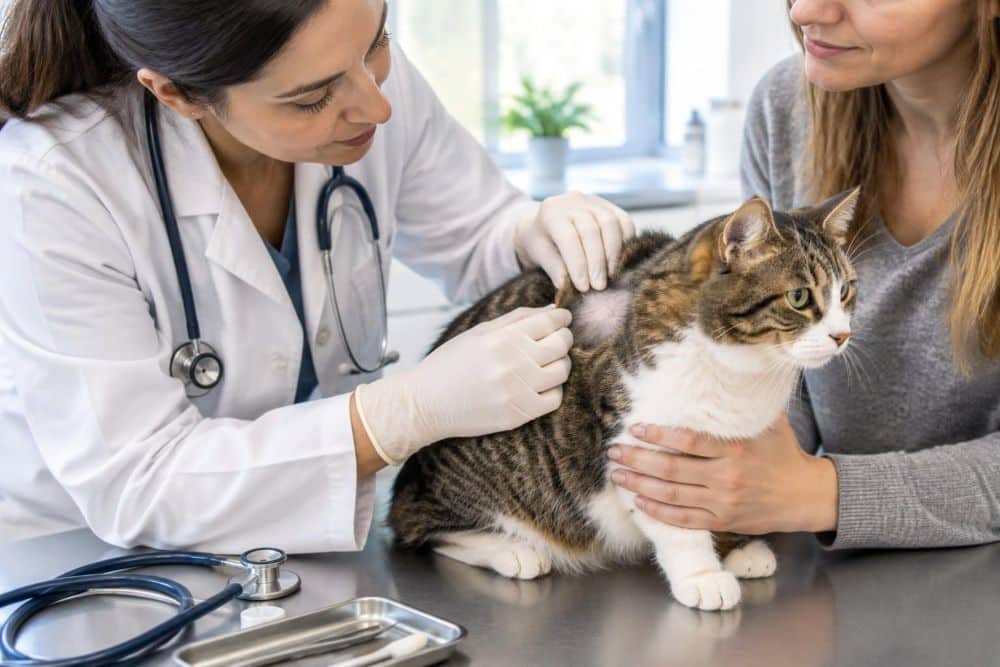
Your vet starts with a physical exam of the skin and coat, then narrows things down with targeted testing based on the pattern of hair loss and any other symptoms. Treatment follows directly from whatever the underlying cause turns out to be, so an accurate diagnosis does most of the work.
What Clues Should You Note Before the Visit?
Write down when you first noticed the hair loss, which areas are affected, and whether it’s spreading. Note any other changes: more scratching, different litter box habits, changes in appetite, or new stress in the household like a move or a new pet.
A couple of photos taken over a week or two help your vet see how quickly things are changing, which is hard to judge from memory alone.
Which Tests Might Your Vet Recommend?
Skin scrapings and hair plucks under a microscope check for mites and assess hair follicle health. A fungal culture or specialized light exam can confirm ringworm, while blood and urine tests screen for thyroid disease, organ function, and other systemic issues.
For suspected allergies, your vet might suggest a food trial lasting several weeks or refer you to a veterinary dermatologist for more specific allergy testing.
What Can You Safely Do While Waiting?
Keep up with flea prevention using a product made specifically for cats, never a dog formula, since some dog flea treatments contain ingredients toxic to cats. Avoid home remedies on the skin itself, since ointments or oils can interfere with testing or irritate the area further.
Reducing obvious stressors, like separating cats that are fighting or adding a quiet retreat space, is safe to try regardless of the final diagnosis.
Getting Your Cat’s Coat Back on Track
A full coat comes back once the underlying cause is treated, not before. Flea and mite infestations clear with consistent, vet approved parasite control; ringworm needs weeks of antifungal medication, often both topical and oral. Allergies improve with diet changes or medication aimed at reducing the itch scratch cycle and stress related overgrooming eases once the trigger is identified and managed.
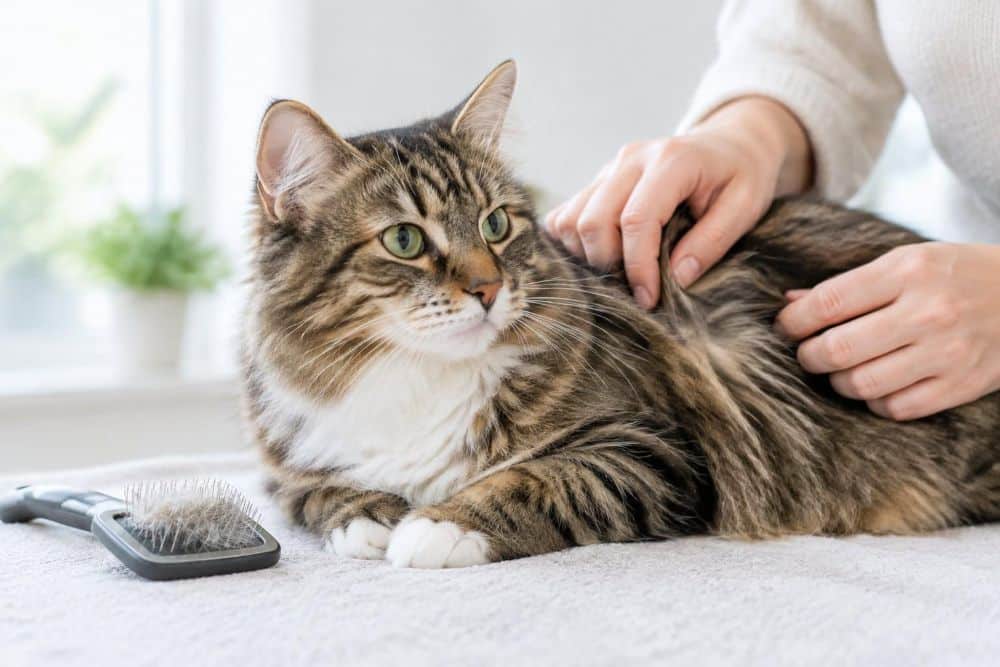
Regular brushing supports regrowth by removing loose, dead hair and stimulating the skin, and a diet with adequate omega fatty acids and zinc supports healthy hair growth in general. Neither replaces treating the root cause, but both help once that treatment is underway.
Patience matters here more than any product. Cat hair grows at roughly a quarter millimeter a day, so a bald patch can take weeks to fill back in even after the underlying problem is fully resolved.
Frequently Asked Questions
Why is my cat losing hair but acting normal?
Some causes of hair loss, like early stage ringworm, mild allergies, or hormonal shifts, don’t cause obvious discomfort even though they’re actively affecting the coat. A cat can also mask pain well enough that overgrooming is the only visible sign something’s wrong. A vet visit is still worthwhile since “acting normal” doesn’t rule out a treatable cause.
Why is my cat losing hair on their belly and back legs?
This pattern is classic for overgrooming, whether driven by allergies, stress, fleas, or pain in the bladder or abdomen. The hair in these spots often looks shaved rather than missing, since it’s being licked away rather than falling out on its own. Pregnant or nursing cats also lose belly hair from hormonal changes.
What causes hair loss on a cat’s head?
Ear mites, ringworm, and allergic reactions frequently show up around the ears, face, and head. Fighting injuries or abscesses are also common in this area, especially in cats that spend time outdoors. A vet exam can distinguish between these causes fairly quickly with a skin scraping or fungal test.
Is hair loss normal in an older cat?
Cats don’t go bald from age alone the way people do, so new hair loss in a senior cat usually points to an underlying issue like thyroid disease, arthritis-related overgrooming, or reduced grooming ability from joint pain. Minor thinning over bony areas like the ankles or ears is sometimes seen in very old cats, but it’s still worth mentioning to your vet. Keeping an elderly cat comfortable↗ covers other age related changes to watch alongside coat changes.
Can worms make a cat lose hair?
Intestinal worms aren’t a typical cause of hair loss, but a heavy worm burden can contribute to poor overall condition, including a dull or thin coat, especially in kittens. Ringworm, despite the name, is a fungal infection rather than an actual worm and is a far more direct cause of patchy hair loss.
What can I give a cat that is losing hair?
The right treatment depends entirely on the cause, so a vet diagnosis comes first, whether that’s flea medication, antifungal treatment, an allergy diet, or pain management. Once a cause is addressed, omega 3 rich food and consistent brushing support coat regrowth, but neither should substitute for diagnosing why the hair loss started.