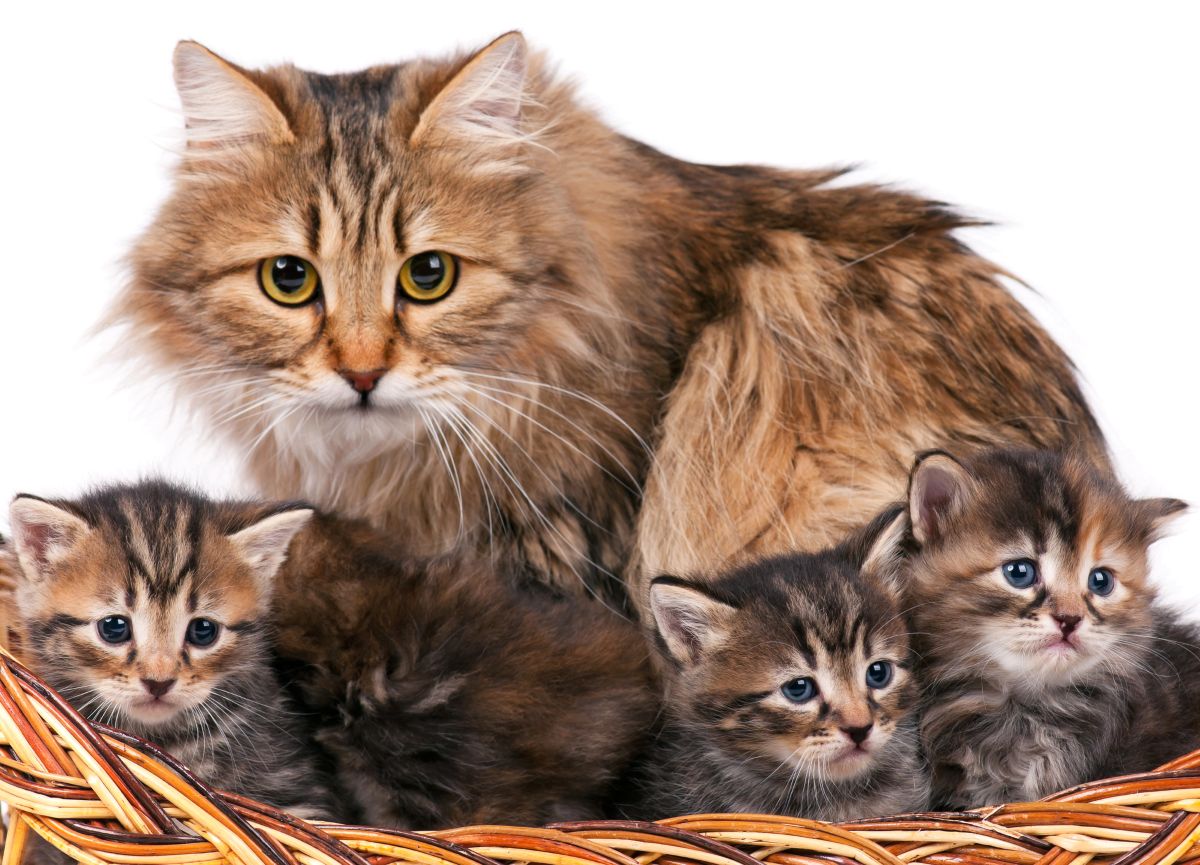
No Siberian cat is guaranteed to be allergy free, but many allergy sufferers tolerate individual Siberians better than other breeds because some produce lower amounts of Fel d 1, the main protein behind cat allergies.
That difference shows up between individual cats within the breed, not across every Siberian evenly, so the right approach is meeting a specific cat before committing rather than trusting the breed label alone.
If you deal with cat allergies and keep circling back to Siberians, you’re not imagining the pattern. When researching Siberian cats and allergies, plenty of people who react badly to other cats report milder symptoms around certain Siberians, and that reputation didn’t come from nowhere.
Table Of Contents
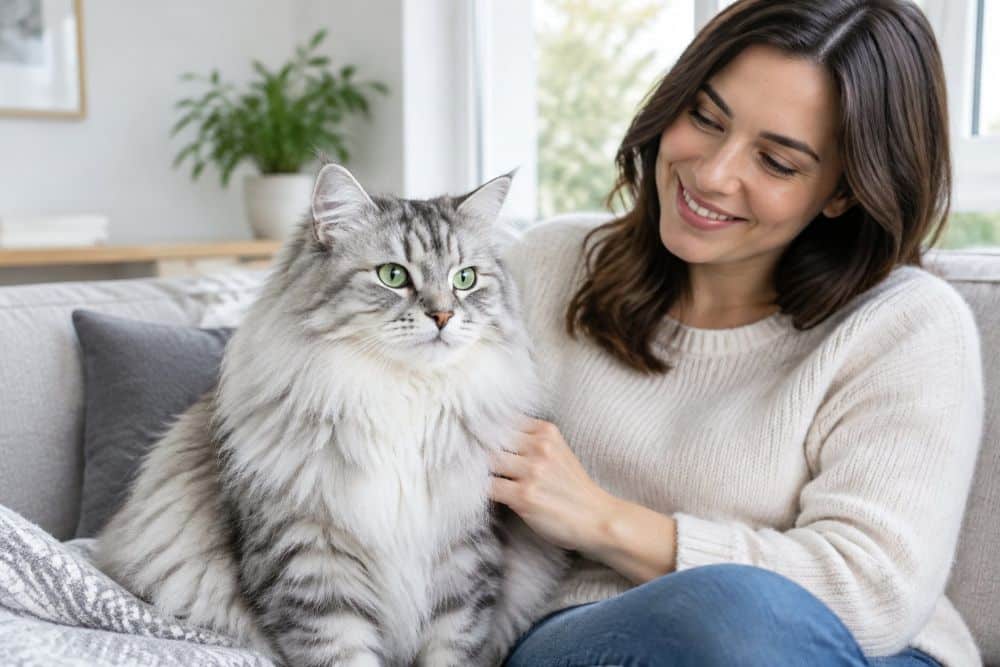
If you are researching the Siberian cat hypoallergenic reputation, separating the real signal from the marketing is worth the effort before you bring one home.
A Siberian cat can still be the right cat for a household managing allergies, as long as you go in with clear expectations and a plan for how to control cat allergies↗ day to day.
What Does the Low Allergen Claim Really Mean?
What Does the Low Allergen Claim Really Mean?
The quest for hypoallergenic cats often leads straight to the Siberian. So, are Siberian cats hypoallergenic? When researching Siberian cat allergies, the low allergen claim means some Siberians produce measurably less Fel d 1 than average, though that trait remains inconsistent across the breed.
While felines produce multiple cat allergens, the Fel d 1 protein is responsible for most cat allergy symptoms. Every cat produces some amount of it regardless of coat length or breed reputation.
Why No Cat Is Guaranteed Allergy Free
Understanding Siberian cats and allergies requires looking closely at how Fel d 1 varies from cat to cat. There is currently no strong scientific evidence proving that Siberian cats consistently produce lower levels of Fel d 1 across the entire breed, according to vet-reviewed analysis of the Siberian hypoallergenic claim. Individual reactions vary widely, and no breed can be guaranteed to avoid triggering a response.
Research shows individual variation within a single breed can exceed 80-fold differences in Fel d 1 output. This wide variation in the Fel d1 protein means two Siberian littermates can land at opposite ends of the allergen spectrum.
How Fel d 1 Reaches Fur, Dander, and Your Home
The Fel d 1 protein is produced mainly in a cat’s salivary and sebaceous glands, not generated by the fur itself. When a cat grooms, saliva carrying the protein spreads across the coat, dries, and attaches to fur and microscopic skin flakes known as cat dander.
These tiny particles readily disperse as airborne allergens and settle into carpets, furniture, bedding, and clothing, based on how Fel d 1 spreads through grooming and shedding. Nearly 95% of cat-allergic patients carry specific IgE antibodies targeting Fel d 1 specifically, which is why it’s treated as the primary allergen to manage in allergy reduction strategies for cats.
What the Evidence Shows About Individual Siberians
Some Siberian breeders report real differences in Fel d 1 output among their own cats. A joint non published study with UC Davis found that roughly half of tested Siberians produced substantially less Fel d 1 than other domestic cat breeds, and no other breed showed consistent changes in allergen production, according to one breeder’s testing program that has since evaluated over 1,000 Siberian cats and kittens over 15 years.
That’s a meaningful signal, not a guarantee. For allergy sufferers, “roughly half” still leaves plenty of Siberians producing allergen levels similar to any other cat.
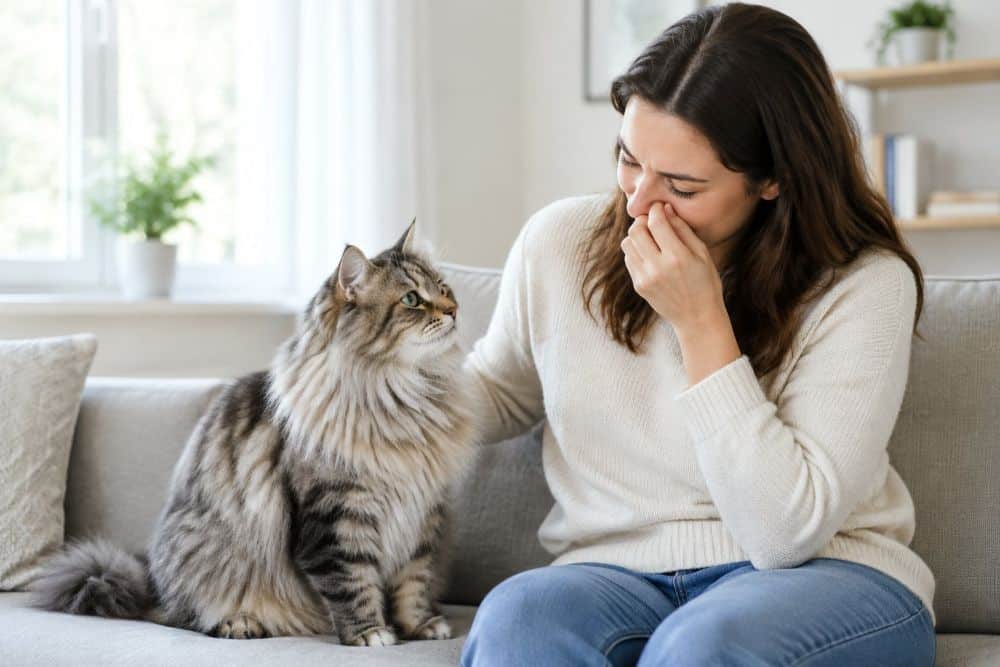
What Should You Check Before Adopting a Siberian?
Talk to an allergist, spend real time with the specific cat you’re considering, and ask what any breeder testing actually measured before you commit. These three steps catch most of the surprises people run into after bringing a Siberian home.
1. When Should You Speak to an Allergist?
Visit your doctor or an allergy specialist before adopting, not after. An allergist can evaluate your sensitivity to cat allergens, confirm whether pets are your true trigger, and discuss allergy management options suited to your specific sensitivity.
This conversation matters most for allergy sufferers with asthma or a history of severe reactions. Getting ahead of it means you’re not troubleshooting a bad reaction in week one with a cat already in your home.
2. How Can You Assess Your Reaction to a Specific Cat?
Spend several hours with the individual Siberian you’re considering before finalizing anything. Many breeders allow prospective owners to visit and interact with a cat directly, which reveals whether that particular cat triggers your symptoms rather than relying on breed reputation alone.
This step matters more than any certificate or breed claim. A kitten’s littermate might react completely differently in your household than the one you’ve researched online.
3. What Can Breeder Fel d 1 Testing Actually Tell You?
Breeder Fel d 1 testing shows how much Fel d1 protein a cat produces compared to standard averages, but it does not predict your personal reaction. Some breeders offer allergen screening for Siberian kittens as young as 12 weeks through programs affiliated with Siberian cat associations.
Treat test results as one data point alongside your own in person reaction, not a substitute for it. A low reading on paper doesn’t override how your body actually responds in the room with that cat.
How Can You Reduce Allergen Exposure at Home?
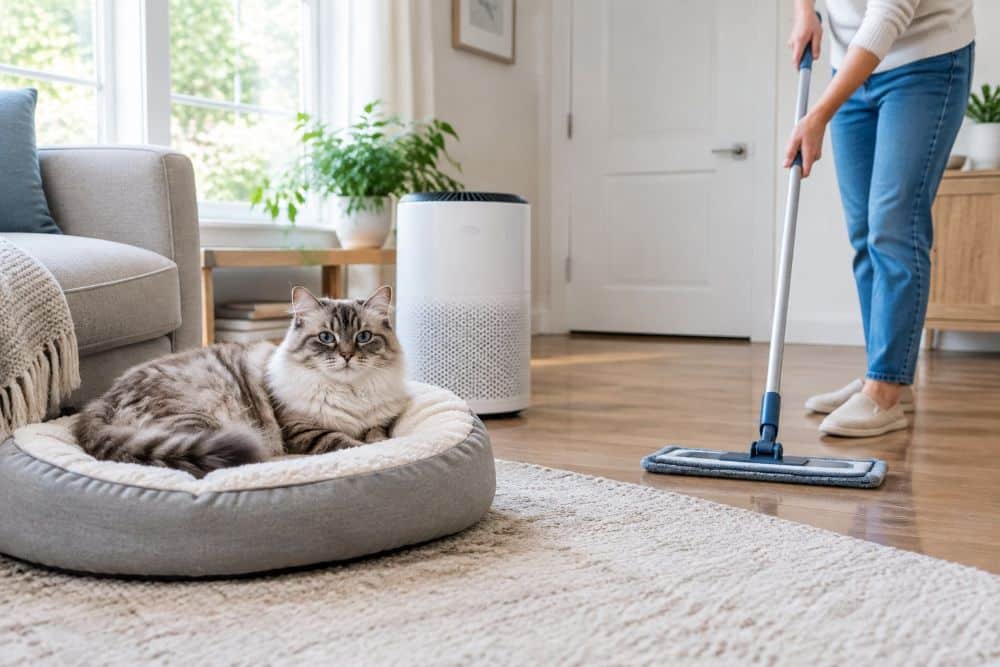
Keeping your bedroom cat free, running HEPA filtration, and staying on top of grooming together cut down the allergen load circulating through your home. None of these steps eliminate exposure completely, but combined they help allergy sufferers make living with a Siberian cat noticeably more manageable. Long term allergy management relies on layering several consistent habits.

Keep the Bedroom Cat-Free and Clean Soft Furnishings
for your cat so you get roughly eight hours of lower allergen air each night. Wash bedding, vacuum upholstery, and launder soft furnishings regularly, since Fel d 1 settles into fabric and accumulates over time.
Carpeted rooms hold onto cat dander longer than hard flooring, so keeping your house clean with cats↗ in mind when choosing cleaning routines pays off.
Use HEPA Filtration Alongside Regular Cleaning
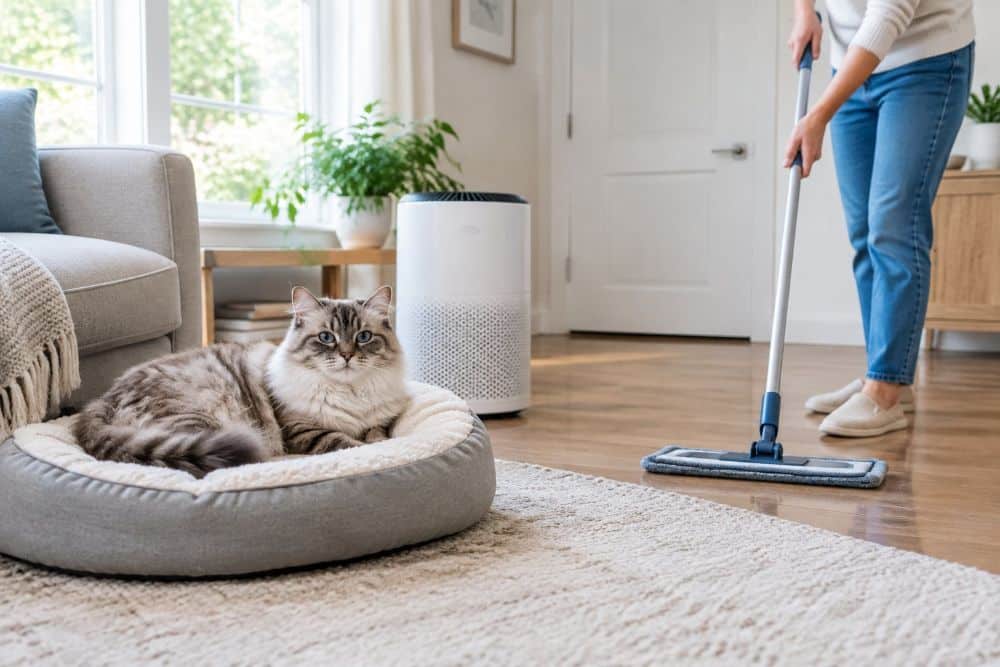
A HEPA air purifier captures airborne cat dander particles that settle on surfaces otherwise, and pairing it with a HEPA filter vacuum covers both the air and the floor. Running HEPA air purifiers continuously in shared living spaces traps airborne allergens and keeps circulating cat allergens to a minimum.
Cleaning and filtration work as complementary layers, since filtration alone won’t remove allergen already embedded in carpet or fabric.

Manage Grooming and Discuss Treatment Options With Your Doctor
Regular brushing reduces the loose hair and cat dander your Siberian sheds around the house, especially during the twice yearly seasonal shed↗. Discuss antihistamines, nasal sprays, or allergy immunotherapy with your doctor as a complementary layer rather than a replacement for household changes.
Wiping your cat down with a damp cloth between full baths also helps limit surface allergen without the stress a full bath can cause.
How Do Siberians Compare With Other Cat Breeds?
When prospective owners research hypoallergenic cats, Siberians sit alongside a handful of breeds commonly discussed in allergy conversations. Breeds like Russian Blues, Balinese, Bengals, and hairless breeds like the Sphynx frequently appear on low-allergen lists, but none of them come with guarantees.
Coat length and shedding frequency influence how cat allergens spread through a home, but they don’t determine how much Fel d 1 a cat produces in the first place.
| Breed | Common Allergy Claim | Coat Type | Key Consideration |
|---|---|---|---|
| Siberian | Some individuals lower Fel d 1 | Long, triple-layered | Variation is individual, not universal |
| Russian Blue | Reported lower allergen in some cats | Short, dense | Same lack of breed-wide proof |
| Balinese | Marketed as low-shedding | Semi-long, single-layer | Less undercoat may mean less trapped dander |
| Bengal | Occasionally marketed as low-allergen | Short, pelted | No consistent allergen-reduction evidence |
| Sphynx | Often assumed allergy friendly | Hairless | Still produces Fel d 1 on skin |
| Maine Coon | Sometimes grouped with “gentle” breeds | Long, heavy | Large coat volume can hold more dander |
Do Russian Blues, Balinese, or Bengals Offer an Advantage?
Russian Blues, Balinese, and Bengal cats are frequently mentioned alongside Siberians in discussions about hypoallergenic cats, but none has stronger proof behind it than the other. The same holds true when considering a Siamese cat, an Oriental Shorthair, or other sleek breeds. Breed alone shouldn’t be the deciding factor over meeting a specific cat.
Why Hairless and Low Shedding Breeds Can Still Trigger Allergies
Many people assume a hairless breed like the Sphynx cat is automatically allergy-free. However, Sphynx, Devon Rex, and Cornish Rex cats still produce Fel d 1 in their skin and saliva despite having little or no fur to shed.
Wavy coated breeds like the Devon Rex are popular with allergy sufferers because their short curls shed very little. Similarly, the Cornish Rex has only a soft undercoat rather than a dense outer layer. Even so, both a Devon Rex and a Cornish Rex still spread the Fel d 1 protein during daily grooming.
Allergen clings directly to skin oils secreted by sebaceous glands on a hairless pet, so a Sphynx cat can still transfer allergen through touch even without loose hair floating around the house. Breeds like the Siamese cat, Oriental Shorthair, Selkirk Rex, and Tonkinese cat fall into a similar category. Short or low-shedding coats do not equal low allergen production.
Does a Long Coat Make Maine Coons or Norwegian Forest Cats Worse?
A longer coat on a Maine Coon or Norwegian Forest Cat means more surface area to carry cat dander and distribute it through the home, but it doesn’t inherently mean the cat produces more Fel d 1.
Grooming frequency and household cleaning habits often matter more for allergen control than coat length alone, similar to what you’d weigh with other large cat breeds↗ that shed heavily. Selkirk Rex, and Tonkinese cats fall into a similar category: short or low-shedding coats don’t equal low allergen production.
Choose the Individual Cat, Not an Allergy-Free Promise
While interest in hypoallergenic cats continues to grow, the decision that matters most for allergy sufferers is choosing the specific Siberian cat in front of you, not trusting a breed-wide label.
Siberian cats as a group show more promise for some allergy sensitive households than most other breeds, but that promise lives in the individual cat’s own biology, not in a blanket guarantee.
Spend time with the cat, talk to your allergist, and treat any Fel d 1 testing as one piece of a larger picture.
Navigating Siberian cats and allergies successfully means planning for real-life exposure rather than assumptions. Understanding your sensitivity to Siberian cat allergies helps prevent difficult surprises later on. When you’re weighing a Siberian against other options entirely, it helps to step back and think through how to choose the right cat↗ for your household’s health needs, not just its personality fit.
Frequently Asked Questions
Are Siberian cats hypoallergenic?
Siberian cats are not completely allergy free, but they can be low-allergen for some individuals. Certain cats produce far less Fel d 1 protein than average, though reactions differ from person to person.
Can someone with severe cat allergies live with a Siberian?
Some people with severe cat allergies report success with specific, carefully chosen Siberians, but it’s never guaranteed. Comfortably living with a Siberian cat requires spending extended time with that specific animal beforehand. Working with an allergist on a personalized management plan also matters far more than the breed label itself.
Which is more hypoallergenic, a Russian Blue or a Siberian?
Neither breed has stronger scientific backing than the other for lower allergen production. Both show individual variation in Fel d 1 levels among their own cats, so the specific animal matters more than which breed you pick between the two.
Are blue Siberian cats less likely to cause allergies?
Coat color has no established connection to Fel d 1 production in Siberian cats. Allergen output relates to an individual cat’s sebaceous glands, saliva, and genetics, not the color or pattern of its coat.
Can a Siberian kitten trigger different reactions as it grows?
Fel d 1 production can shift as a cat matures, particularly around sexual maturity, since hormone levels influence allergen output. A Siberian kitten tested early may not show the same allergen profile once it reaches adulthood.
Does paying more for a Siberian guarantee fewer allergy symptoms?
A higher price tag doesn’t guarantee a cat produces less Fel d 1. Breeder testing and pedigree can offer useful data points, but your own reaction to that specific hypoallergenic Siberian cat remains the most reliable indicator.