If your female cat suddenly starts yowling at odd hours, rubbing against every surface in the house, and holding her tail off to one side, she’s most likely in heat. A cat in heat is simply an unspayed female cat who has reached puberty and is cycling through the hormonal stages that prepare her body for mating.
Recognizing the pattern a cat in heat shows, helps you respond calmly instead of worrying that something is wrong.
Understanding the typical signs of a cat in heat also makes it easier to keep your pet calm and prevent unwanted escapes.
Table Of Contents
The behavior of a cat in heat can feel dramatic the first time you see it, especially the vocalizing and restlessness.
An unspayed female cat will keep cycling every few weeks during her breeding season until she’s either bred or spayed, so getting familiar with the signs now sets you up to handle every future cycle with confidence.
What Are the Signs Your Cat Is in Heat?
A female cat in heat shows a mix of vocal, physical, and behavioral changes that are hard to miss once you know what to look for.
The signs a cat is in heat tend to cluster around increased vocalization, a specific mating posture, and a noticeable shift in energy and neediness.
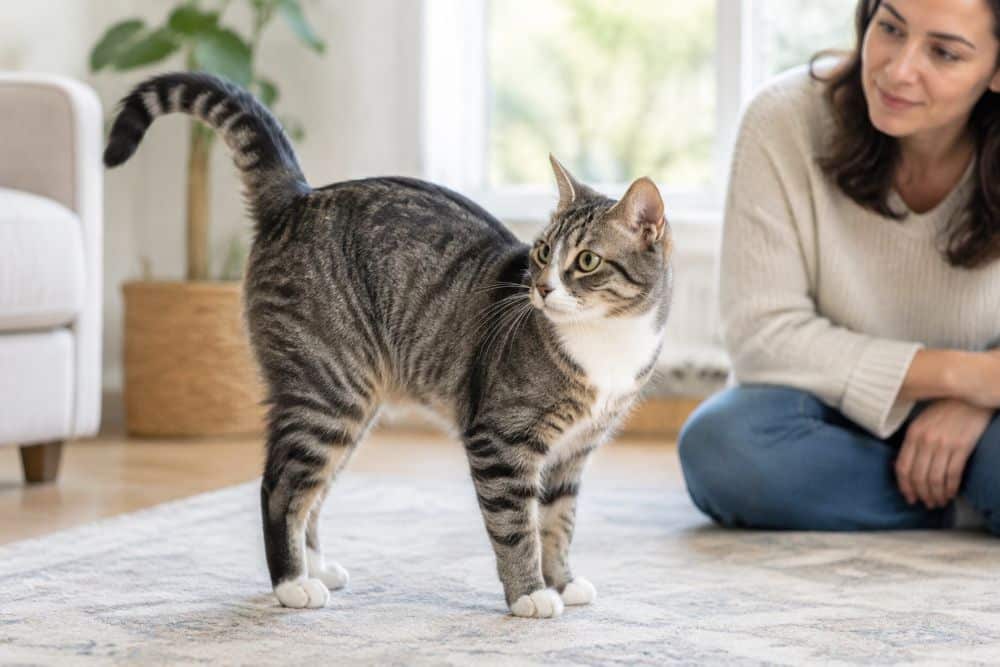
Loud Calling, Rolling, and Extra Affection
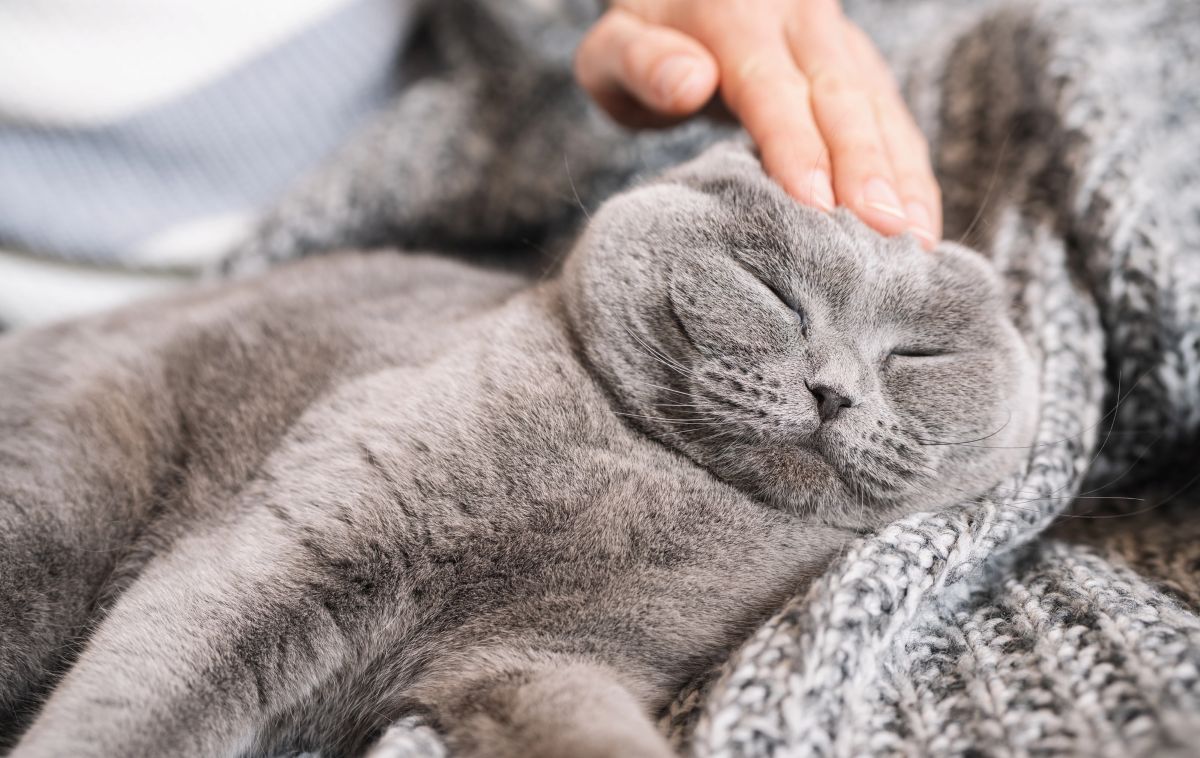
Cats in heat vocalize in a way that sounds different from a typical meow, often described as a yowl or “call” meant to attract a mate. Most cats also become noticeably more affectionate, rubbing against furniture, doorways, and people more than usual.
Rolling on the floor is another classic sign. The combination of loud calling and clingy behavior is what most owners notice first, since it’s such a departure from a cat’s normal routine.
These behavioral shifts are among the earliest signs of a cat in heat. While they can seem abrupt, they are entirely normal mating behaviors designed to attract attention.
Raised Hindquarters, Tail Position, and Restlessness
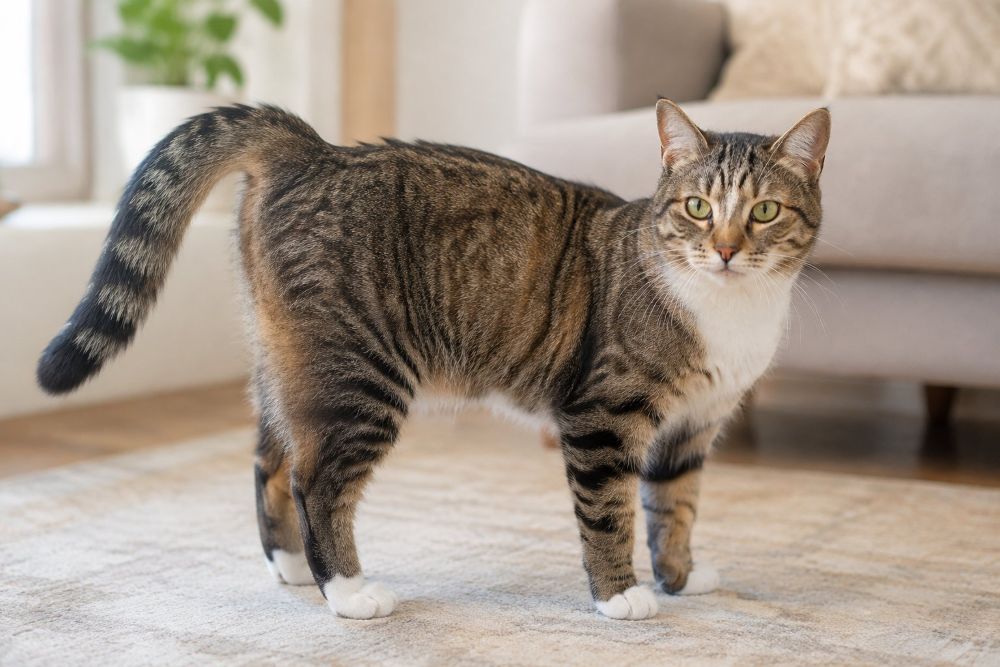
When stroked along the back, a female cat in heat will often raise her hindquarters and shift her tail to one side, a posture veterinarians call lordosis. This reflex, along with treading with the back legs, is one of the most recognizable signs of estrus ↗in cats.
Restlessness tends to build alongside this posture. Your cat may pace, have trouble settling, or seem unable to get comfortable even in her favorite spots.
Urine Marking, Escape Attempts, and Appetite Changes
Some cats urinate more frequently or spray small amounts on vertical surfaces while in heat, since the urine carries pheromones that signal her reproductive state to nearby tomcats. This scent can also draw intact males toward your home, which is why frequent urination and marking↗ often accompanies escape attempts toward doors and windows.
Appetite can shift too, with some cats eating less during the most active days of a cycle. If you’ve dealt with a cat sneaking toward an open door before, it’s worth reviewing how to keep a cat from running out the door↗, since being in heat makes that urge much stronger.
When Does Heat Start, and How Long Does It Last?
Pet parents often ask when do cats go into heat and how long are cats in heat once the cycle begins. Most cats have their first cycle between 5 and 9 months of age, depending on breed, weight, and birth season.
Each active cat heat phase, called estrus, usually lasts three to 14 days↗, and the full cat heat cycle moves through several distinct stages before repeating.
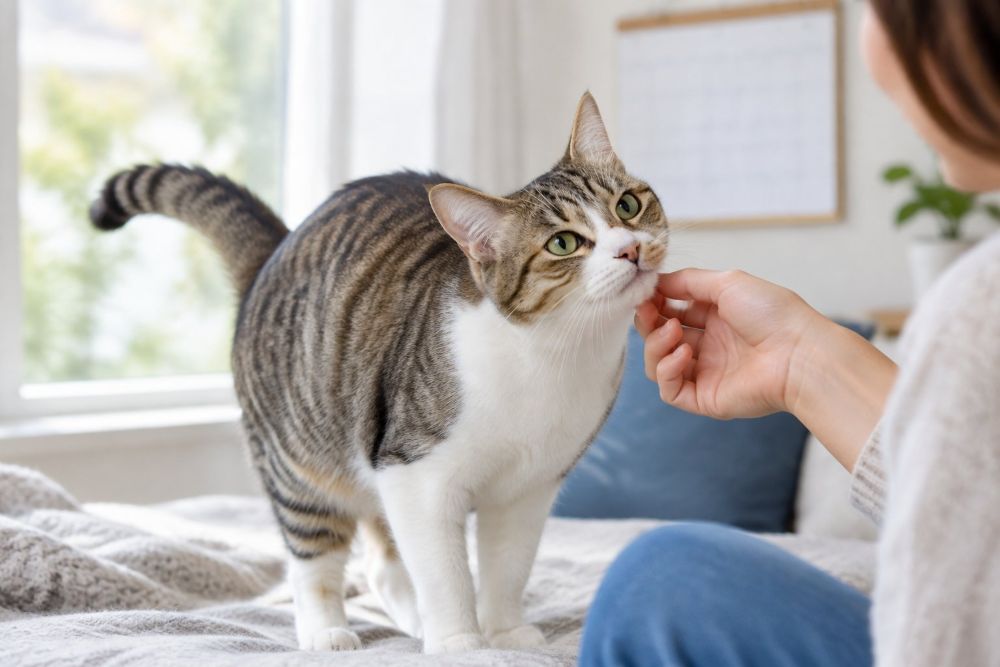
When Do Cats Have Their First Heat?
If you are tracking your kitten’s growth, you might wonder when do cats go into heat for the first time. Cats typically reach puberty between 5 and 9 months old, though some kittens cycle as early as 4 months, according to veterinary research on feline heat timing↗.
Shorthaired breeds tend to mature earlier than longhaired ones. Also, cats that reach roughly 80% of their adult body weight often begin cycling sooner regardless of age.
Daylight exposure plays a role too. A kitten born in early spring may cycle earlier than one born in fall, since longer daylight hours trigger the hormonal changes behind puberty in cats.
How Long Does Each Heat Last, and How Often Does It Return?
If you are wondering how long are cats in heat, each estrus phase lasts about a week on average, though it can range from three to 14 days. The complete estrous cycle, including the resting period between heats, commonly spans one to six weeks↗, averaging around three weeks when a cat doesn’t mate.
If she isn’t bred, the cat heat cycle will repeat every two to three weeks throughout her breeding season. Outdoor cats tend to follow a seasonal pattern that peaks between February and October, while indoor cats exposed to consistent artificial light can cycle nearly year round.
What Happens During Each Stage of the Heat Cycle?
The cat in heat cycle moves through four main stages: proestrus, estrus, interestrus (or metestrus), and anestrus. Proestrus lasts just one to two days and rarely shows visible symptoms, though males may start showing interest.
Estrus is the cat in heat stage most owners recognize, since it brings the vocalizing, rolling, and mating posture described earlier.
Cats are induced ovulators, meaning they only release eggs after mating, so if no mating occurs she enters interestrus for one to three weeks before the cycle restarts. Anestrus is the seasonal resting phase, typically lasting two to three months each year↗ when hormone activity pauses.
How Can You Keep Your Cat Safe and Comfortable?
Keeping a cat in heat safe, mostly comes down to preventing escapes, offering comfort at home, and avoiding shortcuts that promise to “fix” the behavior. None of these steps shorten the cycle, but they reduce stress for both of you while it runs its course.
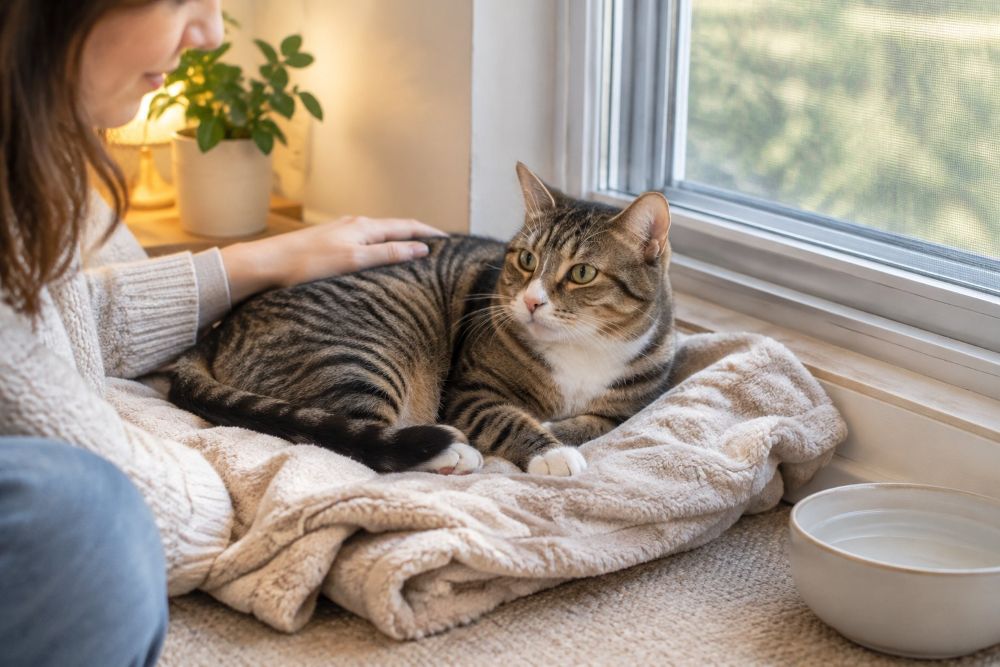
Prevent Escapes and Keep Intact Males Away
A cat in heat is highly motivated to get outside and find a mate, so secure windows, screens, and doors matter more than ever during a cycle. If you’ve had a close call before, it helps to read up on what to do after an indoor cat got out↗, since intact females in heat can travel further and faster than you’d expect.
Intact male cats may also be drawn to your home by scent alone, sometimes spraying near entry points or trying to get inside. Keeping her fully indoors during this time is the most reliable way to prevent an unplanned litter, and why cats should be kept in at night↗ is worth revisiting if she normally has outdoor access.
Offer Quiet Rest, Gentle Attention, and Play
A soft bed in a quiet room, combined with gentle petting and short play sessions, can take the edge off her restlessness. Feather wands and laser pointers give her an outlet for the extra energy that builds during estrus.