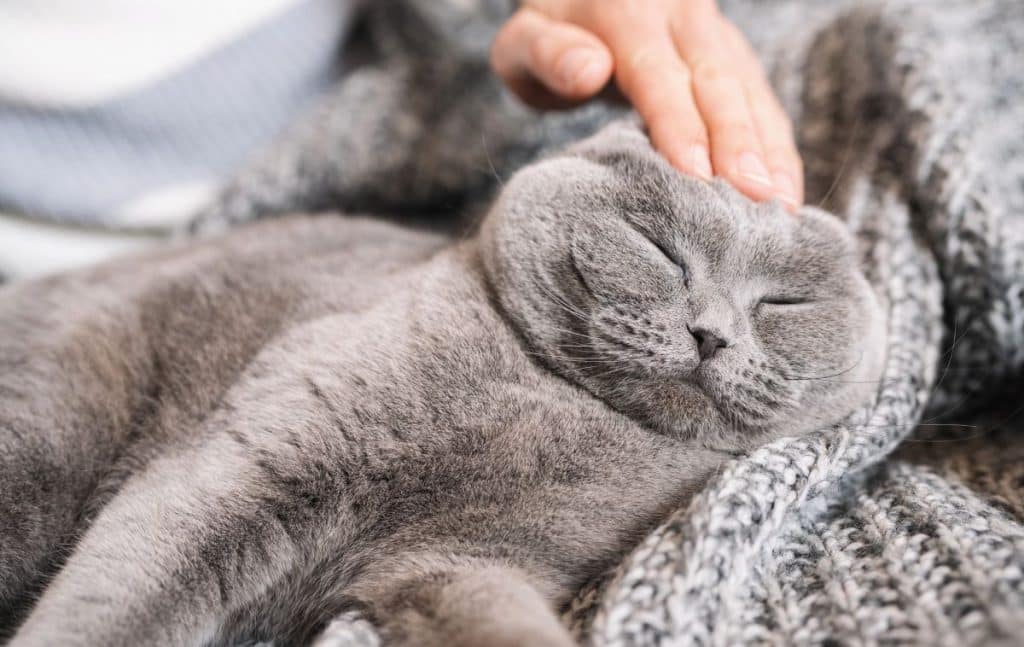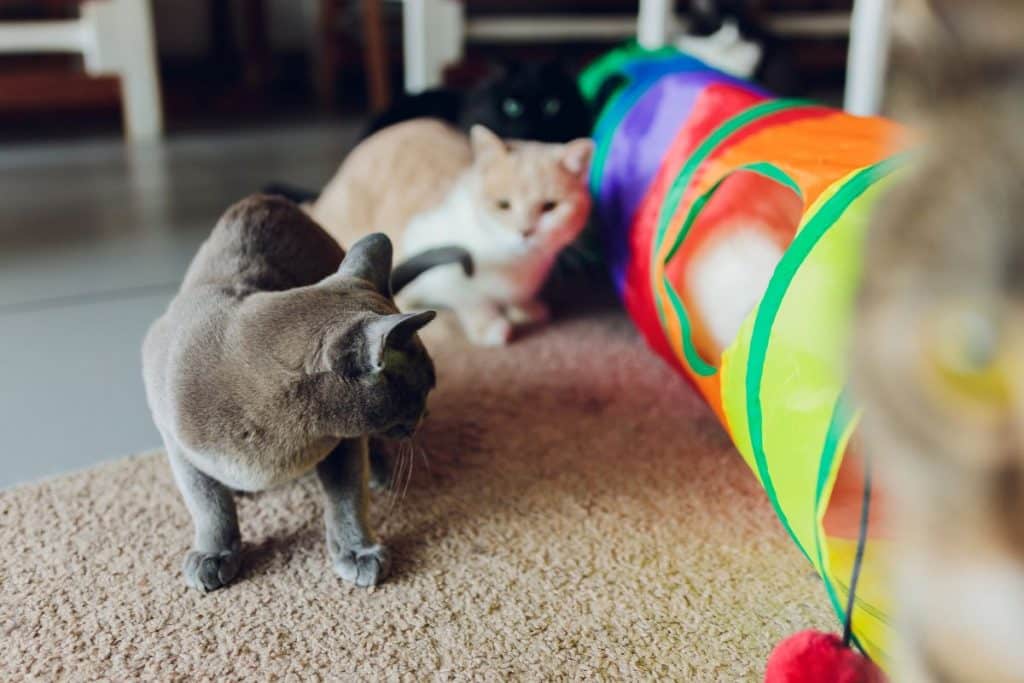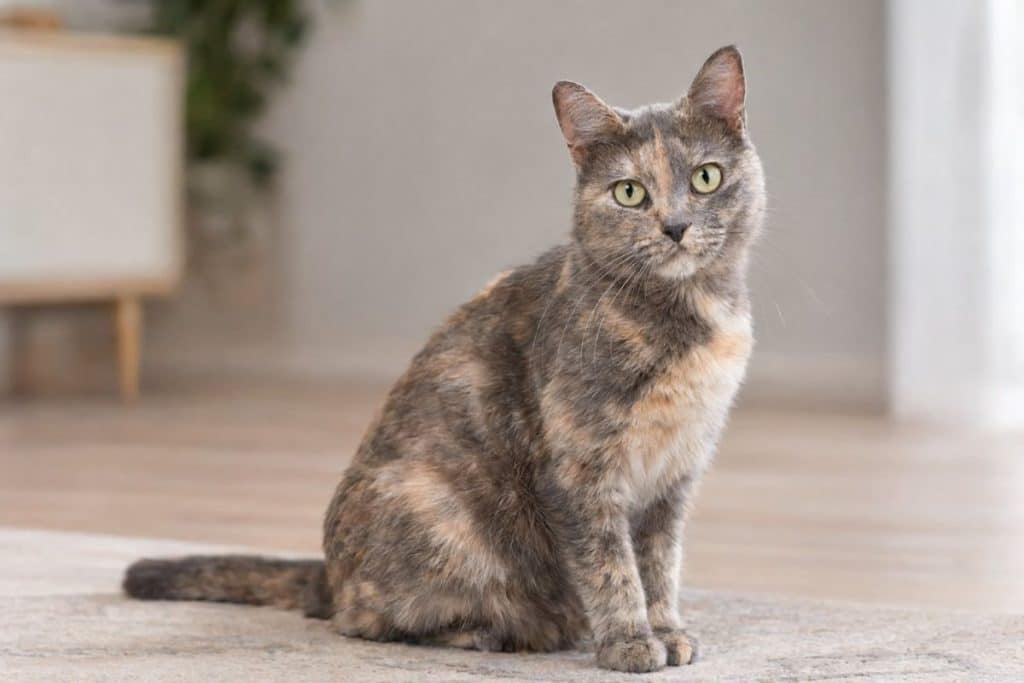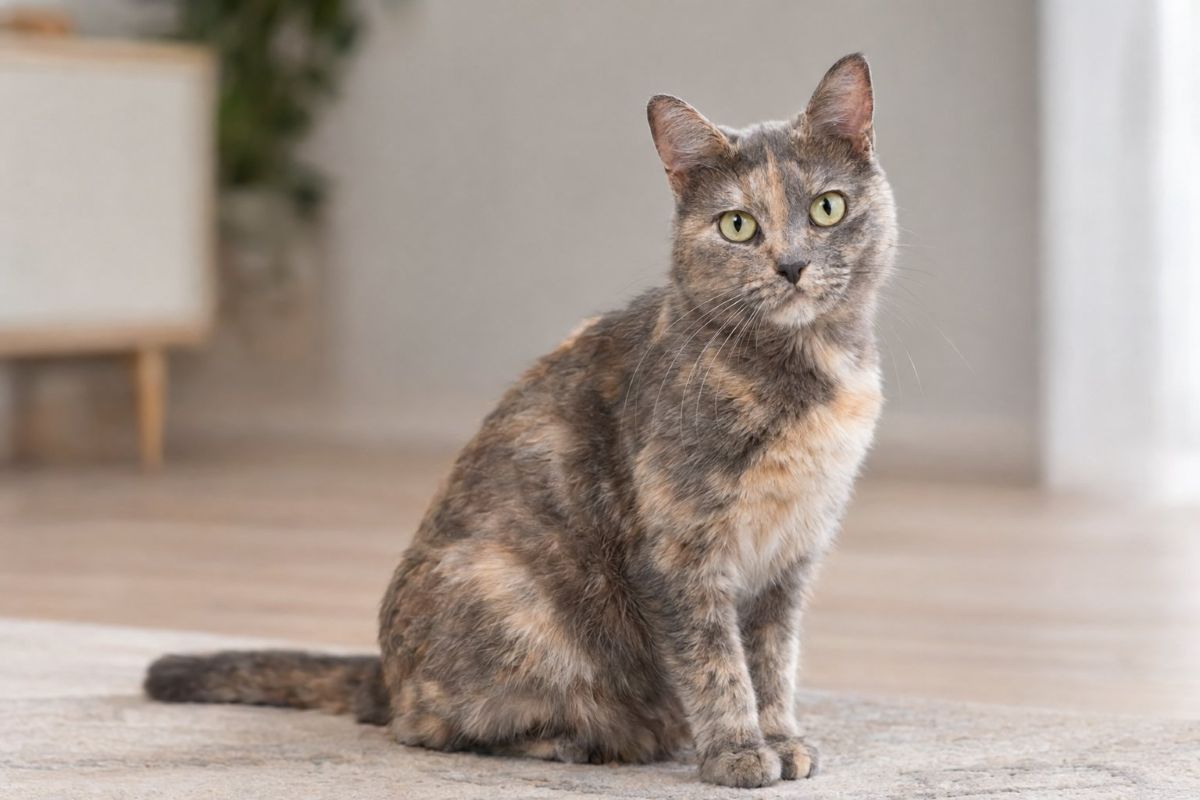
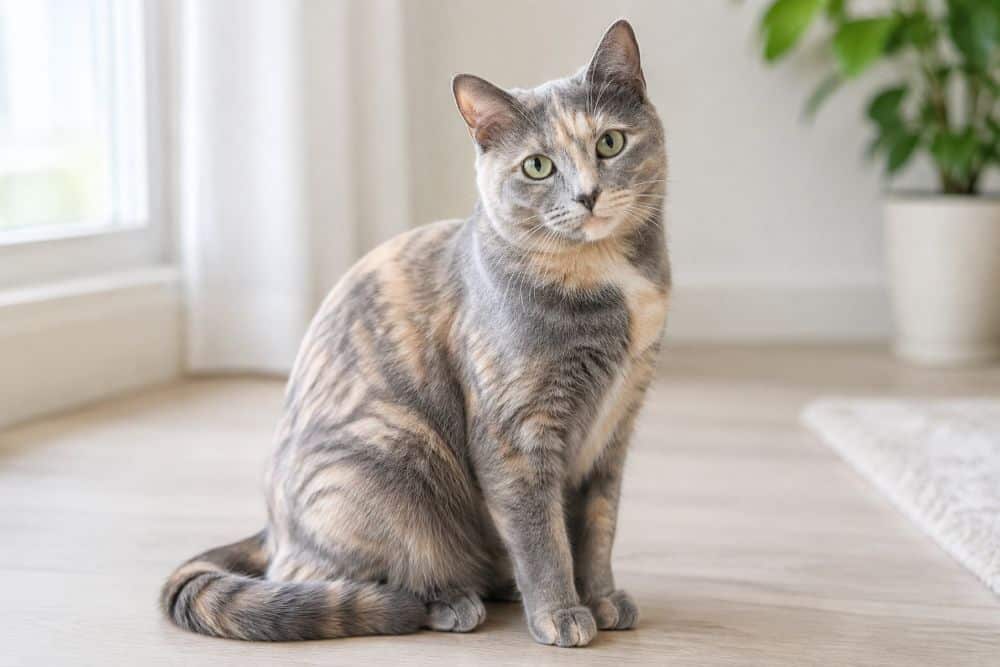
A dilute tortoiseshell cat wears softened patches of blue gray and cream instead of the bold black and orange of a standard tortie.
The muted effect of a dilute tortoiseshell cat comes from a single recessive dilution gene acting on normal tortoiseshell pigment, and it shows up across many breeds and coat lengths rather than being tied to one pedigree.
If you share your home with one of these cats, or you’re thinking about adopting one, knowing how the pattern works helps you tell it apart from similar coats like dilute calico.
Table Of Contents
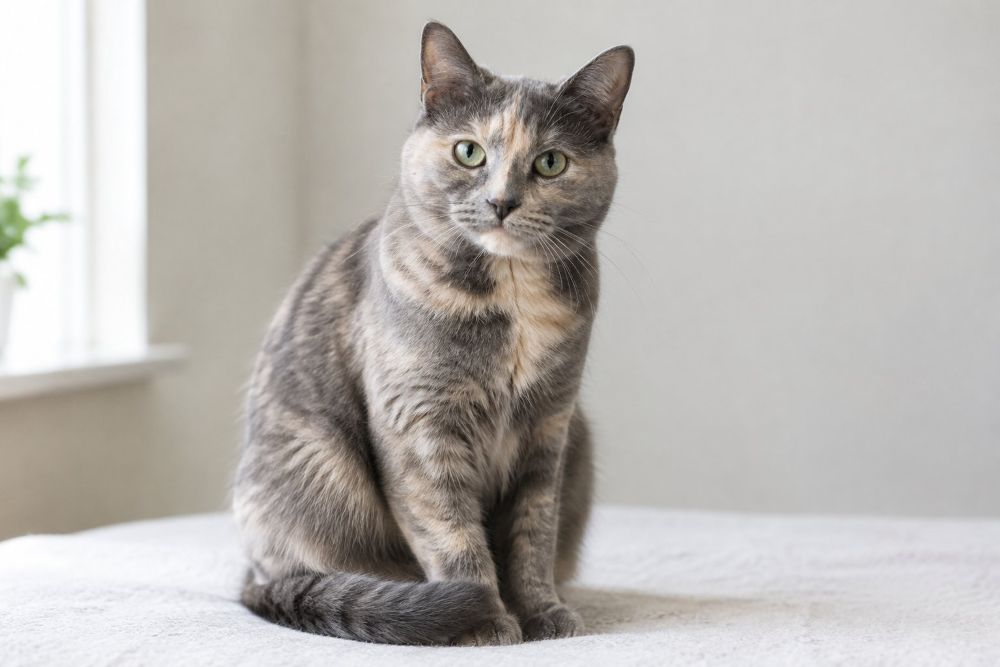
A dilute tortoiseshell cat is a tortie whose black and orange patches have been softened by a recessive dilution gene into blue gray and cream.
The underlying tortoiseshell pattern in the coat color of the cat stays the same, only the intensity of the pigment changes. Dilute torties show up in random bred domestic cats and in several purebred lines, and the soft coloring is purely cosmetic, with no bearing on health or disposition.
How Can You Recognize a Dilute Tortoiseshell Coat?
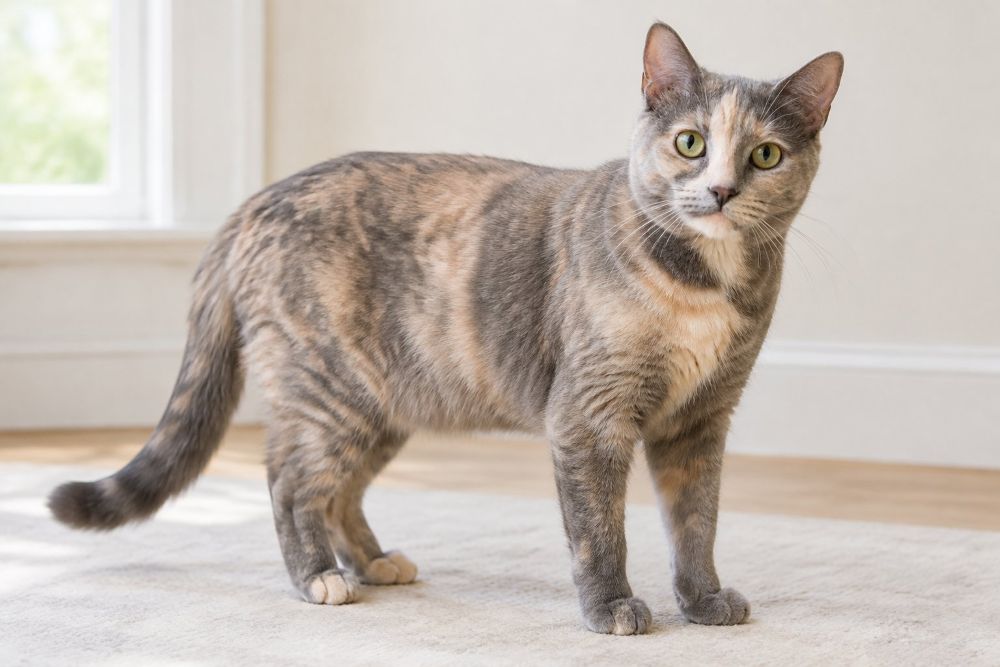
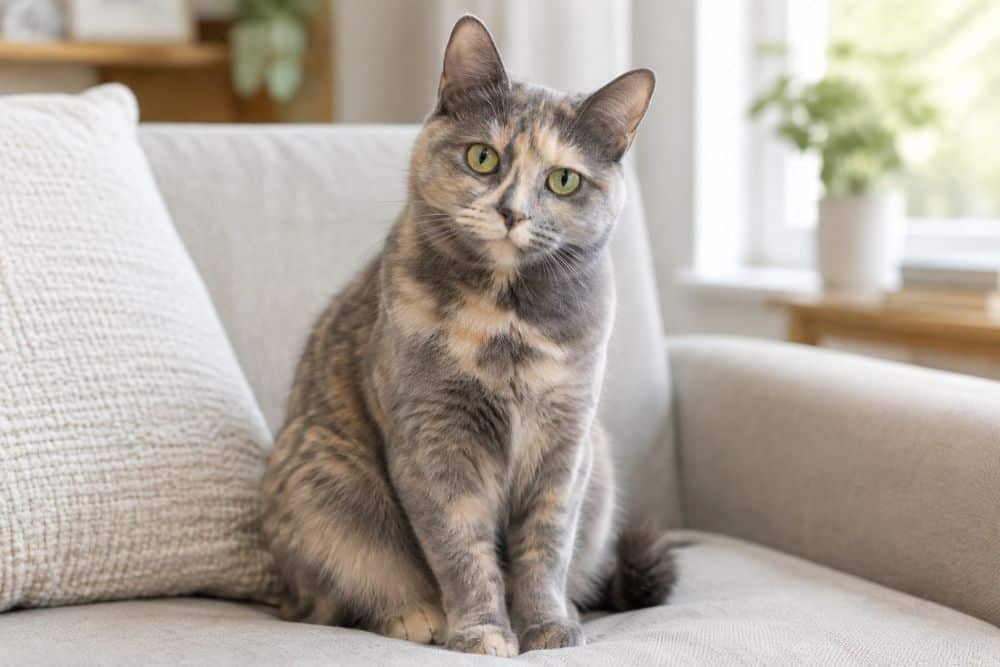
You can spot a dilute tortoiseshell coat by its soft, powdery patches of blue gray and cream blended across the body instead of sharp black and orange. The patches tend to look brushed together rather than sharply outlined, giving dilute torties a gentler, almost pastel look compared to a standard tortoiseshell cat.
This gorgeous softened version of the dilute tortoiseshell coat pattern can appear in any cat that carries the right combination of tortoiseshell and dilution genes, regardless of breed or pedigree status.
How Blue Gray and Cream Differ From Black and Orange
A standard tortoiseshell cat, like the cat below, carries bold, high contrast patches.
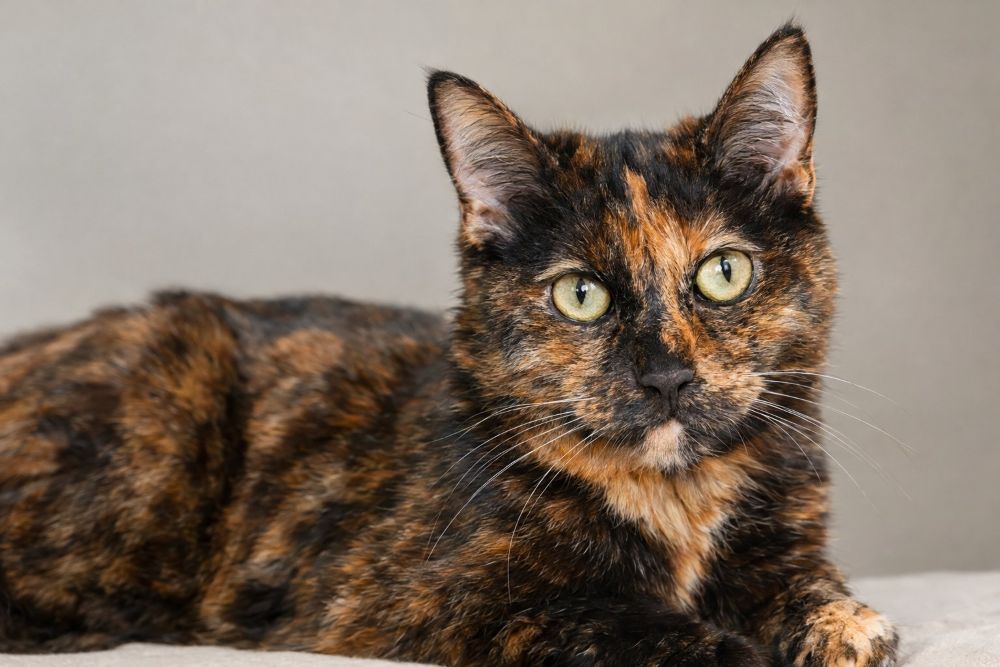
A dilute tortie carries the same pattern but with the saturation turned down, so black becomes a soft blue gray and orange becomes a pale cream. The patches themselves are inherited the same way, only their depth of color changes.
Side by side, the difference is easy to see, muted torties have a hazy, watercolor quality where regular torties look crisp and graphic.
Dilute Tortie vs. Dilute Calico vs. Dilute Torbie
These three coats get mixed up often, so the distinction matters.
- Dilute tortie: blue gray and cream patches with no white in the coat.
- Dilute calico: the same blue gray and cream patches, but combined with white patches from the piebald spotting gene, giving a tricolor look instead of a two color one.
- Dilute tortie: a tortoiseshell pattern layered with tabby striping, so the blue gray and cream patches also carry faint tabby markings on the legs, tail, or face.
Calico cats and dilute calico cats are genetically torties with an added white spotting gene, not a separate pattern altogether.
Which Breeds and Coat Types Can Have These Markings?
Dilute tortoiseshell coloring appears across many cat breeds and in mixed breed cats. You’ll find it in the domestic shorthair, American Shorthair, British Shorthair, Maine Coon, Persian, Cornish Rex, Devon Rex, and Sphynx, among others.
Different cat breeds showcase this coloration in distinctive ways depending on fur density. While some cat breeds feature sleek coats that highlight the pastel shades, longhaired lines present a softer, cloud like blend of color.
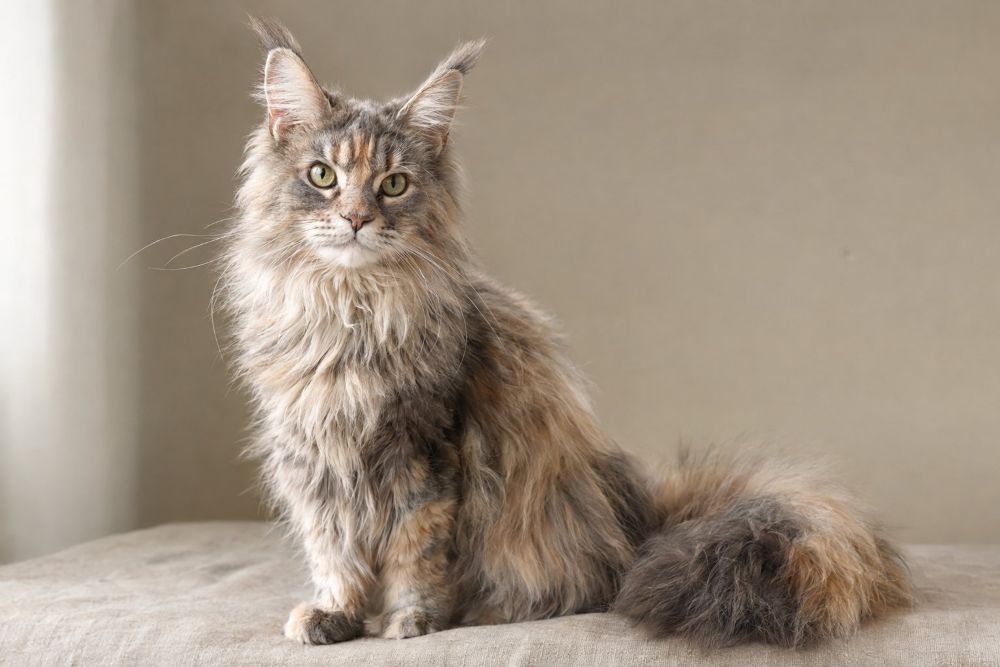
Because the pattern depends on pigment genes rather than coat texture, a blue gray and cream coat can appear across diverse fur types. Maine Coons with their long fur (see image below) and Sphynx cats with almost no fur can both display the same muted blue gray and cream combination.
For instance, a British Shorthair dilute tortie carries the muted palette over a dense, plush coat. In an American Shorthair, the muted pattern sits over a classic, muscular build with smooth fur.
Rex breeds showcase how unique textures interact with the color scheme. A Cornish Rex with its fine, rippled curls presents the blue gray and cream patches in an eye catching, wavy pattern.
What Genetics Create the Muted Colors?
Dilute tortoiseshell coloring results from two separate genetic events, a tortoiseshell pattern carried on the X chromosome, and a recessive dilution gene that softens the pigment produced by that pattern. This dilution is rooted in the MLPH gene, and both traits have to be present for a cat to show the muted blue gray and cream look instead of standard black and orange.
The Science – How X Chromosomes and X-Inactivation Create Tortoiseshell Patches
The gene that determines orange versus black pigment sits on the X chromosome. A female cat has two X chromosomes, and if one carries the orange version and the other carries the black (non orange) version, early in development each cell randomly shuts off one of those X chromosomes. The result is a patchwork of cells expressing orange and cells expressing black, which shows up as the tortoiseshell coat pattern.
How Two Dilute Alleles Soften Coat Pigment
Separate from the X linked color gene, the MLPH gene, or melanophilin gene, controls how pigment granules are distributed in each hair shaft. Because dilution is governed by an autosomal recessive gene, a cat must inherit a mutated MLPH gene from each parent to express the softer shade.
When mutations alter the melanophilin gene, the dilute allele changes intracellular pigment transport. This dilute coat gene causes eumelanin and the orange pigment to clump unevenly in the hair, scattering light and producing the softer blue gray and cream tones instead of solid black and orange.
Why Most Torties Are Female and Males Are Unusual
Because the orange/black gene sits on the X chromosome, a cat typically needs two X chromosomes to show both colors at once, which is why tortoiseshell and dilute tortoiseshell patterns appear almost exclusively in females. A male tortoiseshell cat can occur when a cat is born with an extra X chromosome (XXY), a condition that usually comes with reduced fertility. Male dilute tortoiseshell cats follow the same rule, they need that same chromosomal variation to display the patched coat at all.
A male dilute tortoiseshell cat is extraordinarily rare, appearing in roughly one out of every 3,000 tortie births. Despite this chromosomal quirk, an individual male dilute tortoiseshell cat enjoys normal companionship and play, living much like any typical feline.
Because an XXY male tortoiseshell cat is almost always sterile, these cats are cherished as unique companion pets. Families who adopt a male tortoiseshell cat can expect the same playful affection found in any loving feline.
Are Dilute Torties Really Rare?
Dilute tortoiseshell cats are not considered a distinct breed, so they are not formally tracked for rarity, but the genetics stacking an X linked pattern with a recessive dilution gene makes the combination less common than standard tortoiseshell coloring. If you’re curious how this ranks among other unusual coat colors, the rarest cat coat colors↗ covers where dilute patterns fall relative to other rare pigmentations.
Does Coat Color Predict Personality?
Coat color does not reliably predict a cat’s personality, and dilute tortoiseshell cats vary in temperament just as much as any other coat pattern. While discussions about tortoiseshell cat personality often suggest these cats are uniquely spunky, coat color and behavior genes are not functionally connected.
In practice, a dilute tortie cat may be shy, gregarious, or somewhere in between. Spending quiet time with a dilute tortie cat will reveal far more about her temperament than any coat pattern could.
What Owners Mean by Tortitude
“Tortitude” is the informal term tortoiseshell owners use to describe a reputation for feisty, independent, strong willed behavior. It’s a popular shorthand, not a scientific classification, and it gets applied to tortoiseshell and dilute tortoiseshell cats alike regardless of whether an individual cat actually behaves that way. Plenty of dilute torties are mellow and affectionate, while plenty of solid colored cats are just as headstrong.
Many pet parents wonder if dilute torties display this famous tortitude to a lesser degree because their colors are softer.
In reality, tortitude is simply an affectionate cultural myth rather than an inheritable temperamental trait of a dilute tortoiseshell cat.
What Coat Color Research Can and Cannot Tell You
Some studies have looked at whether coat color correlates with traits like aggression or sociability, and results have been mixed and inconsistent. When evaluating tortoiseshell cat personality, research shows early socialization and genetics unrelated to coat color matter far more.
Coat color genes are well mapped and sit on known locations on the X chromosome and elsewhere, separate from any genes tied to behavior. That genetic separation is a big reason dilute tortie personality claims should be treated as anecdote rather than prediction, a cat’s coat tells you about pigment genetics, not about who she is.
Getting to Know Your Cat’s Individual Temperament
The only reliable way to understand your cat’s personality is to spend time observing her directly. Watch how she responds to new people, handling, and changes in her environment, and build a sense of her preferences over weeks rather than assuming anything from her coat.
If you want a head start on reading your cat’s everyday signals, petting your cat↗ covers how to notice what she enjoys and what she tolerates.
What Care Does a Dilute Tortie Need?
A dilute tortie needs the same fundamentals as any cat, balanced nutrition, regular grooming suited to her coat length, routine veterinary care, and a stable home environment.
Coat color of a cat has no bearing on dietary needs, grooming frequency, or medical risk, so care decisions should be based on her age, coat type, and individual health rather than her pattern.
Daily cat health depends far more on preventive vet checkups, fresh water, and balanced food than on coat pattern. Keeping up with core vaccinations and parasite prevention supports lifelong cat health across all life stages.
Matching Food, Grooming, and Vet Visits to Your Cat
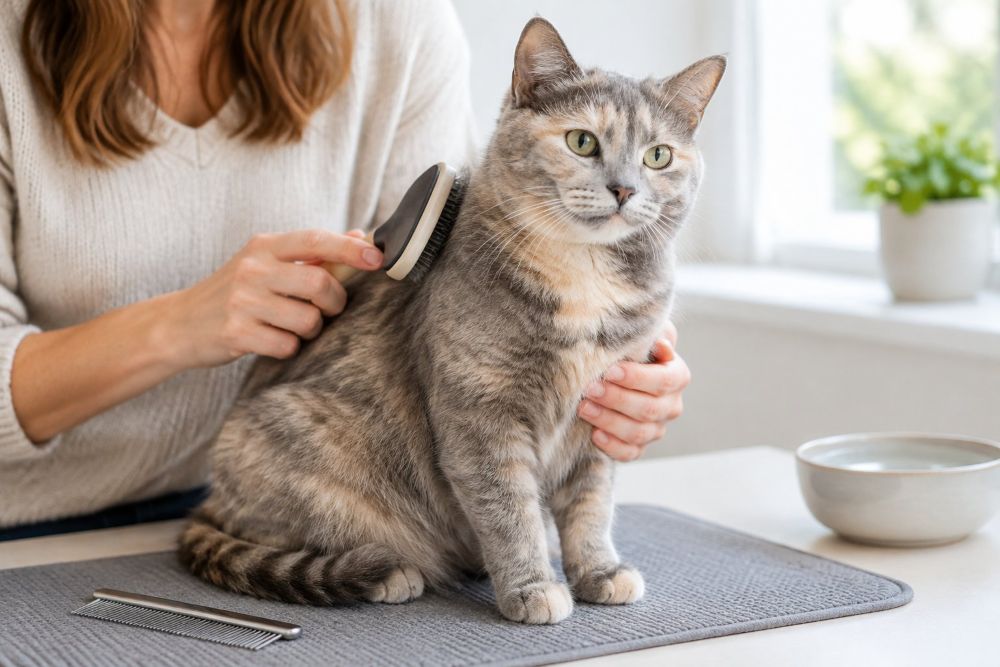
Feed a dilute tortie cat according to her age, activity level, and any health conditions, the same as you would any cat. Grooming needs depend on coat length and texture rather than color.
A longhaired Persian dilute tortie needs more frequent brushing than a short coated domestic shorthair. Meanwhile, a dense coated British Shorthair or an American Shorthair benefits from regular weekly combing, whereas a Cornish Rex needs only gentle maintenance for its delicate waves.
Keep up with routine veterinary checkups, and track her weight over time using body condition score for cats↗ so you catch gradual changes early.
Adoption Questions to Ask Beyond Coat Color
When adopting a dilute tortoiseshell cat, ask about her health history, behavior around other pets, and any known sensitivities rather than focusing on her coloring. A shelter or rescue can tell you more about her actual temperament than her coat ever will. If you’ve noticed patchy fur loss in a current cat and want to rule out medical causes before assuming it’s pattern-related, cat losing hair↗ walks through common triggers worth checking with your vet.
Appreciate the Coat and Care for the Individual
A dilute tortoiseshell cat earns attention for her soft blue gray and cream patches, a cosmetic trait produced by one recessive gene acting on a tortoiseshell pattern. That coloring says nothing reliable about cat personality, and it has no effect on the fundamentals of cat health. The most useful approach is to enjoy the coat for what it is and make every other decision, from food to vet visits to daily routine, based on the cat in front of you.
Frequently Asked Questions
How much does a dilute tortoiseshell cat cost?
Dilute tortoiseshell cats are usually mixed breed and often available through shelters and rescues at standard adoption fees rather than breeder pricing. Cost varies widely if the dilute pattern appears in a purebred cat, since price then reflects the breed rather than the coat coloring itself.
Purebred kittens from a Cornish Rex, American Shorthair, or British Shorthair breeder will reflect standard pedigree prices rather than a mark up for the color pattern.
Can dilute tortoiseshell cats have long hair?
Yes, coat length depends on separate genes from coat color, so dilute tortoiseshell markings appear in both shorthaired and longhaired cats. A long haired Persian or Maine Coon can display the same blue gray and cream coat as a shorthaired domestic cat.
Does a dilute tortoiseshell coat affect lifespan?
Coat color has no established effect on a cat’s lifespan or general health. Any health risks a dilute tortoiseshell cat faces come from her individual genetics, breed background, and care rather than from the dilution gene itself.
Where can I adopt a dilute tortoiseshell cat?
Local animal shelters and rescue organizations frequently have dilute tortoiseshell cats available, since the pattern occurs commonly in mixed breed populations. Checking with multiple shelters in your area and asking about upcoming litters increases your chances of finding one.