
A tiny stray shows up on your porch, or a shelter hands you a kitten with no paperwork, and the first question is always the same one: how old is this little guy actually?
You can get a solid age estimate by checking the kitten’s eyes, ears, teeth, weight, and movement together, since no single sign tells the whole story on its own.

Eyes open around 8 to 12 days and are fully open by two weeks, according to ASPCApro. Pair that with ear position, tooth eruption, and a scale, and you can pin down a kitten’s age to a fairly narrow window, often within a week or two. That matters for feeding schedules, vaccine timing, and whether a kitten needs round the clock bottle feeding or is ready for a litter box and wet food.
Which Clues Give the Best Kitten Age Estimate?
Table Of Contents
The most reliable kitten age estimate comes from layering several physical signs rather than leaning on just one. Eyes and ears tell you the most in the first two weeks, teeth take over as the best marker from three weeks onward, and weight gain works as a rough cross-check once a kitten is nursing or eating well.
What Do the Eyes and Ears Tell You?
Closed eyes and folded ears mean a kitten is under two weeks old. Newborns are born with their eyes shut and their ears flattened against their head, and both features start to change on a predictable timeline.
Eyes begin opening between 8 and 12 days of age and are fully open by two weeks, per ASPCApro. Ears start unfolding around day seven and are mostly uncurled by the end of the second week, according to Alley Cat Allies. Keep in mind that eye color at this stage is almost always blue and doesn’t reflect the kitten’s adult eye color.
When Do Kitten Teeth Come In?
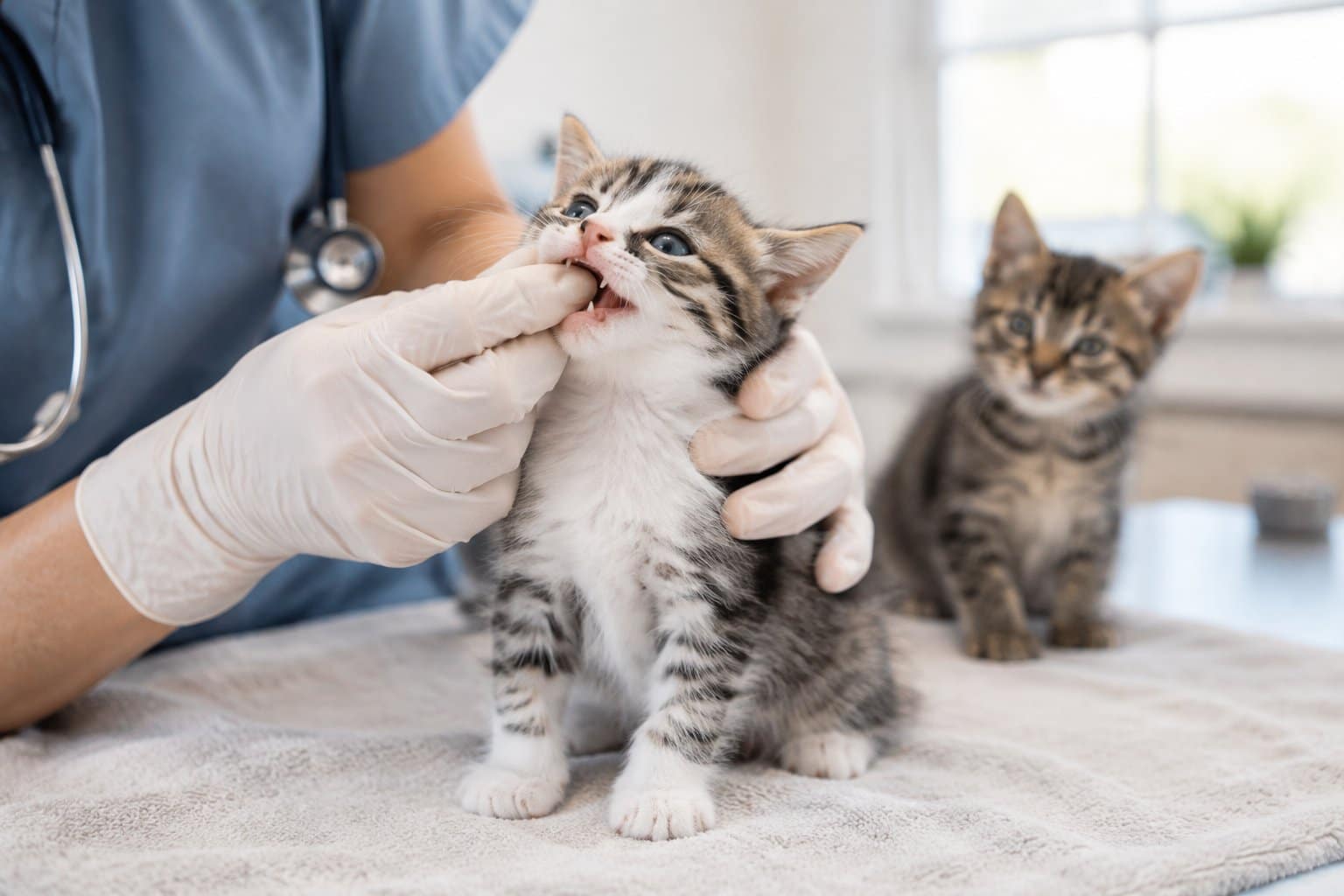
Teeth are the single best clue once a kitten passes the three-week mark. Baby teeth start coming in around 3 weeks of age, and the first permanent teeth, the middle incisors, don’t appear until 12 weeks, with the 2nd and 3rd incisors following at about 14 and 16 weeks, according to ASPCApro.
Baby teeth look small with pointed tips, while permanent teeth are wider with flat edges. Comparing a few teeth side by side makes the difference easier to spot than examining one tooth alone.
What Can Movement and Play From A Kitten Tell You?
Confident walking and active play point to a kitten being at least four weeks old. Most kittens start walking around 3 weeks of age, but coordination takes a little longer to develop, so a kitten who walks well and plays with littermates is comfortably past that newborn wobble, per ASPCApro.
Vigorous, almost nonstop play usually shows up around five weeks, once a kitten’s eyesight is fully developed. Watching how a kitten moves across a room tells you more than watching it sit still.

How Useful Is Weight?
Weight works well as a secondary check but shouldn’t be your only clue. A kitten in good body condition weighing around 1 pound is roughly 4 weeks old, a 2 pound kitten is about 8 weeks old, and a 2.5-pound kitten is close to 10 weeks old, according to ASPCApro.
Malnourished kittens can weigh half as much as a healthy kitten of the same age, so weight alone can seriously undercount a sickly kitten’s real age. Always weigh weight against eyes, teeth, and movement rather than trusting it in isolation.
Kitten Age Chart: What Changes as They Grow?
A week by week kitten age chart gives you a fast reference, but real kittens vary somewhat, so treat these ranges as a guide rather than a guarantee. The pattern runs from total helplessness at birth to teeth, independence, and self-feeding by two months old.

Birth to 2 Weeks: Fully Dependent on Mom
A newborn kitten weighs between 2.9 and 3.9 ounces, has closed eyes, folded ears, and no teeth, according to Alley Cat Allies. They can’t regulate their own body temperature, can’t eliminate waste without help, and spend about 90 percent of their time sleeping.
By one week, a kitten has roughly doubled its birth weight to around 8 ounces, and eyes are nearly fully open though still unfocused. Kittens this young need feeding every two hours around the clock if the mother isn’t present.
3 to 4 Weeks: First Teeth and Wobbly Steps
This is when baby teeth emerge and walking becomes noticeably steadier. By the third week, you can usually tell a kitten’s sex, and this is a good point to introduce a litter box along with wet kitten food, per Alley Cat Allies.
By three weeks, weight climbs to close to 15 ounces, and kittens start eliminating waste without help around day 20. At four weeks, kittens are sturdy on their feet and actively playing with littermates, toys, and people.
5 to 8 Weeks: Weaning and Growing Independence
Weaning accelerates during this window, and kittens shift from nursing to eating solid food on their own. The weaning process generally takes 4 to 6 weeks total and begins around one month old, according to Catster.
By six to eight weeks, kittens typically weigh between 1 and 2 pounds and are very active and playful, per Best Friends Animal Society. Eyes may also begin shifting away from blue toward their adult color around this stage.

After 8 Weeks: Teeth Become More Useful Than Size
Past 8 weeks, size becomes a less reliable age marker since kittens grow at different rates depending on breed, nutrition, and litter size. Teeth take over as the more dependable signal of determining a kitten’s age, since permanent incisors don’t start coming in until around 12 weeks, according to ASPCApro.
A kitten at 8 or more weeks typically weighs 2 pounds or more, is stable on its feet, and is highly active, per Best Friends Animal Society. This is also the stage where body condition and tracking weight against age bands like those in this how much to feed a cat by age and weight guide becomes genuinely useful for feeding decisions.
What Should You Do If You Find a Young Kitten?
If you find a young kitten, check for the mother before you do anything else, since healthy kittens are almost always better off with her than with you. Once you’ve confirmed whether mom is in the picture, matching warmth and feeding to the kitten’s age becomes the priority.

Check for the Mother Before Moving a Safe Kitten
Never separate kittens from their mother without confirming she’s truly gone. If kittens look healthy and are resting calmly, mother cats routinely leave for hours at a time to hunt or check the area, according to Martha Stewart.
Watch from a distance for 10 to 12 hours before assuming abandonment, per Best Friends Animal Society. One trick worth trying: a light ring of flour around the nest shows paw prints if mom has returned. Kittens under six weeks old make up the largest share of euthanized animals in public shelters, so leaving a cared for litter alone is often the safer choice, according to Martha Stewart.
Match Warmth and Feeding Support to the Kitten’s Needs
A kitten’s age should directly decide how you feed and warm it. Kittens younger than three weeks can’t regulate body temperature and need external heat, with newborn nest temperatures ideally between 89°F and 93°F, dropping to around 75°F once a kitten hits four weeks, according to Catster.
Orphaned kittens need a kitten milk replacer (KMR) rather than cow’s milk, which can cause life threatening diarrhea, per Alley Cat Allies. Feeding frequency scales down with age: every two hours under a week old, every three to four hours in week two, and every four to six hours by week three, according to Catster. Mixing kitten formula into wet food is the standard way to start weaning around one month old.
When Should a Veterinarian Check Your Estimate?
A veterinarian should examine any kitten who seems cold, weak, injured, or isn’t feeding, regardless of how old you think it is. Beyond emergencies, a vet visit is also the right place to confirm your age estimate and line up the first rounds of preventive care.

Get Prompt Help for a Cold, Weak, Injured, or Nonfeeding Kitten
Newborn kittens should see a veterinarian right away if they’re orphaned, show signs of illness, or aren’t feeding well, according to Chewy. Dehydration and chilling are the two biggest threats at this age, and signs include limpness, sunken eyes, and lethargy.
Kittens under five weeks old who’ve lost their mother need around-the-clock bottle feeding, which carries real risk if done incorrectly, per Martha Stewart. A vet or experienced rescue volunteer can tube-feed or stabilize a kitten safely when home feeding attempts aren’t working.
Ask About an Age Estimate and the First Preventive-Care Visits
A veterinarian can refine your home estimate using the same signs you’ve already checked, plus a full physical exam. If a kitten is with a healthy mother, a vet visit is often recommended around 6 to 8 weeks old for first vaccinations and deworming, according to Chewy.
This is typically when the FVRCP vaccine series starts, protecting against several common feline viruses. Kittens aren’t considered fully protected by vaccines until 16 weeks or older, so timing the series correctly depends on getting the age estimate right in the first place. For guidance on what comes after that first visit, see this breakdown of how often should you take your cat to the vet.↗
Use Several Clues to Choose the Right Care
Combining eyes, ears, teeth, weight, and movement gives you a far more reliable age estimate than any single sign. A kitten with open eyes and no teeth narrows things down quickly; add in weight and activity level, and the window tightens further.
Treat weight as a supporting clue rather than a standalone measure, since malnourished kittens can weigh half as much as healthy kittens the same age. Teeth become the most trustworthy marker past three weeks, right as eyes and ears stop changing fast enough to be useful on their own.
When in doubt, a veterinarian’s exam settles the question and sets you up with the right feeding schedule and vaccine timing from day one.

Frequently Asked Questions
Can you tell a kitten’s age by its teeth?
Yes, teeth are one of the most reliable age markers once a kitten passes three weeks old, since baby teeth start erupting around that age. Permanent middle incisors don’t appear until around 12 weeks, with the 2nd and 3rd incisors following at 14 and 16 weeks, so comparing tooth size and shape narrows the estimate considerably.
How accurate is weight for estimating a kitten’s age?
Weight is a useful cross-check but not a standalone measure, since a 1-pound kitten is roughly 4 weeks old and a 2 pound kitten is around 8 weeks old in good body condition. Malnourished or sick kittens can weigh half as much as a healthy kitten the same age, so weight should always be paired with eyes, teeth, and movement.
How old is a kitten with open eyes but no teeth?
A kitten with fully open eyes but no visible teeth is likely between two and three weeks old, since eyes finish opening by two weeks and baby teeth don’t start coming in until around three weeks. Checking ear position and walking ability helps narrow the estimate further within that window.

How can I estimate the age of a stray kitten?
Check the kitten’s eyes, ears, teeth, weight, and mobility together rather than relying on one sign. Closed eyes and folded ears mean under two weeks, early teeth and wobbly walking suggest three to four weeks, and confident play with some baby teeth points to five weeks or older.
Can a veterinarian tell exactly how old a kitten is?
A veterinarian can give a closer estimate than a home check, but even professionals work from the same physical signs rather than pinpointing an exact birth date. A vet exam is still the best option for confirming age when a kitten seems unwell, injured, or isn’t feeding properly.