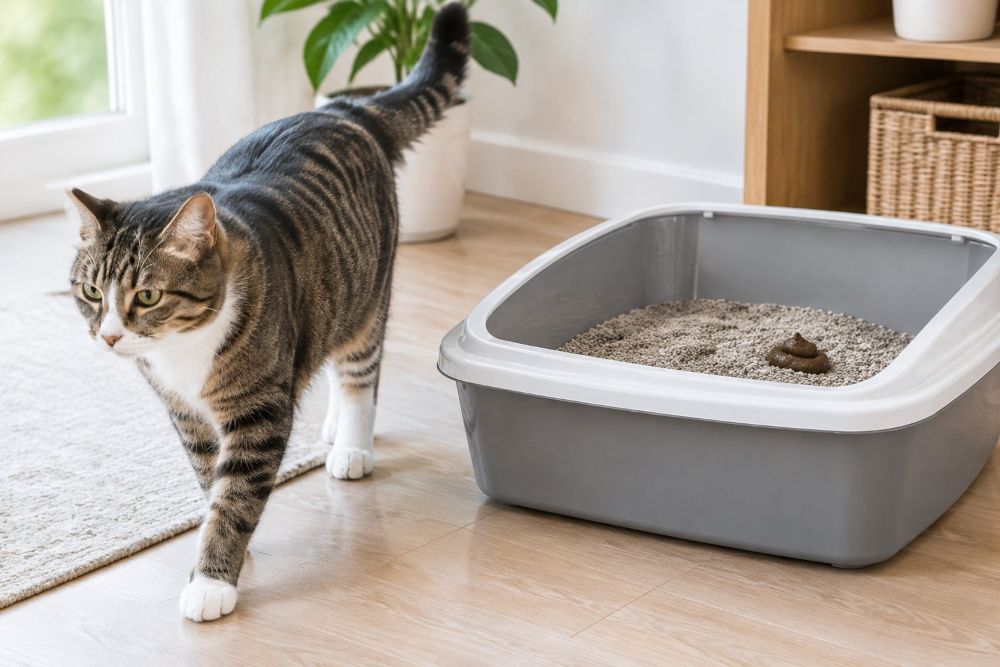
Finding your cat’s poop sitting uncovered in the litter box can be alarming the first time you notice it, especially if your cat normally buries everything neatly.
A cat not covering their poop is almost always a behavior or comfort issue, not an emergency on its own, though it’s worth checking the box setup and your cat’s mobility before assuming it’s “just a quirk.”
The habit of digging and covering starts young, and some cats never fully commit to it even when everything else about their litter box routine looks normal.
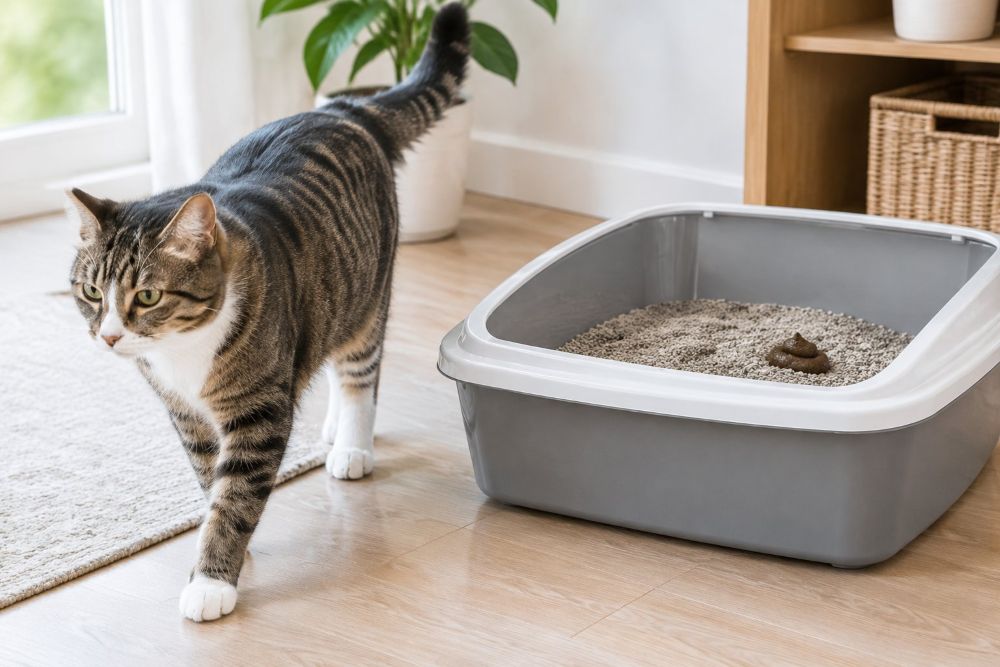
When investigating the cause of your cat not covering its poop, it helps to separate two very different situations right away.
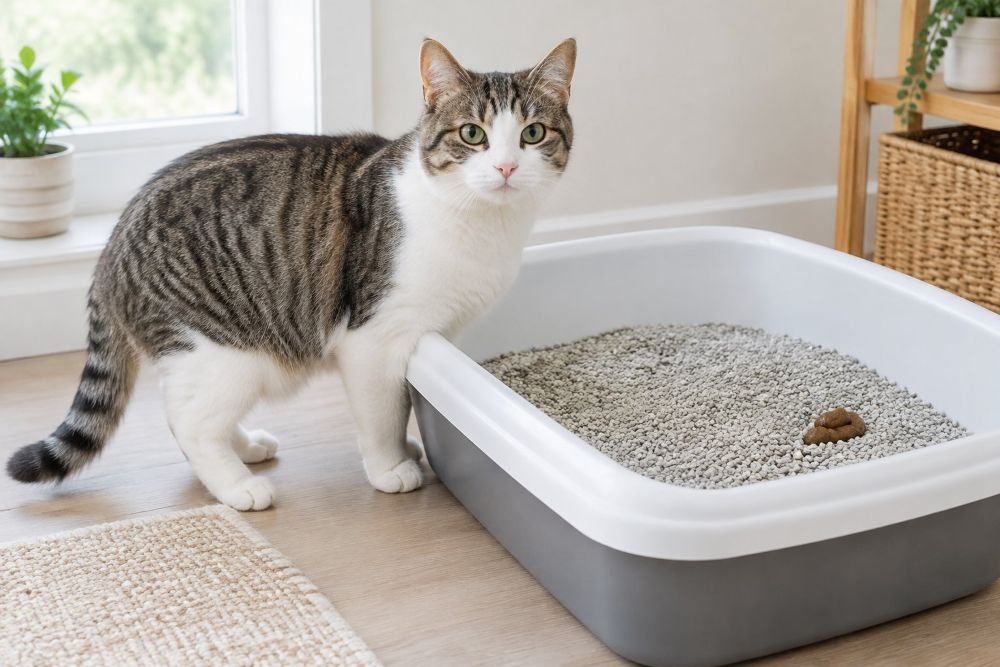
- A cat who poops inside the box but leaves it uncovered is behaving within a normal range of feline habits.
- A cat who skips the box entirely and leaves waste on the floor, rug, or elsewhere is dealing with something more urgent, whether that’s an aversion to the box itself or a medical issue affecting mobility or urgency.
This article focuses on the first scenario, while flagging where the two overlap.
What Can Explain Uncovered Poop Inside the Litter Box?
Uncovered poop inside the cat litter box usually traces back to one of five things, habit and learning, the litter or box set up, feeling rushed, physical discomfort, or scent related signaling.
Covering feces is described as an innate behavior that typically starts around 7 weeks of age, though the AAFP and ISFM guidelines on house-soiling behavior↗ note that some cats leave their waste exposed regardless of training.
Has Your Cat Always Done This, or Is It a Sudden Change?
A lifelong cat poop, non coverer is different from a cat who used to bury waste and suddenly stopped.
Some kittens never fully pick up the covering poop behavior from their mother and simply grow into adults who skip it, which lines up with research on elimination behavior patterns in domestic cats↗ showing that covering after elimination varies between individual cats.
A sudden shift in a previously consistent poop cover ing cat points toward something changing in the environment or in the cat’s body. Think about new pets, a recent move, a litter switch, or anything that changed in the days before you noticed.
Could the Litter, Cleanliness, or Box Size Be the Problem?
A cat litter box that’s too small, too dirty↗, or filled with the wrong litter texture can discourage a cat from digging at all. Cats that don’t have room to turn around comfortably may rush the whole process, skipping the cover step entirely.
Scooping the litter box frequency, matters more than most owners expect. Research into litter box preferences for defecation↗ found cats showed a preference tied to surface area and box type, suggesting that space and cleanliness genuinely shape litter box behavior rather than being a minor detail.
Does Your Cat Feel Rushed or Unsafe?
A cat who feels exposed while using the box may get in and out as fast as possible, skipping digging and covering to minimize time spent vulnerable. This often shows up when the box sits in a high traffic hallway, near a loud appliance, or close to where another pet likes to lurk.
Multi cat households add another layer, since one cat’s confidence near the box can shift sharply depending on whether a rival cat is nearby. Feline elimination research on inappropriate elimination behavior↗ connects a lack of digging and covering, with the presence of other cats nearby and how this can change how carefully your cat finishes the job.
Could Pain or Limited Mobility Make Digging Uncomfortable?
Digging requires bending, balancing on three legs, and extending the paws into litter, all of which get harder with joint pain, arthritis, or recent injury. Older cats↗ in particular may simply find the motion uncomfortable rather than unwanted.
If your cat seems stiff, hesitant to jump, or slower getting in and out of the box, mobility is worth ruling out before assuming it’s a behavioral choice. A best litter box for elderly cats↗ with a low entry can reduce the physical effort involved in the whole routine, including the covering step.
Is Scent Communication a Possible Factor?
Leaving waste uncovered can serve as a way of marking presence, something documented and still visible in some domestic cats’ habits. This doesn’t mean every uncovered pile signals a power struggle. Household structure, outdoor cats visible through windows, and simple habit all play into it without needing a dominance explanation.
When Should You Contact a Veterinarian?
Call your veterinarian when uncovered poop comes with pain signals, changes in stool consistency, or visible straining, since these point to a physical cause rather than a simple preference. On its own, skipped covering rarely needs urgent attention, but paired with other symptoms it becomes a different conversation.
Sudden Changes, Pain, or Difficulty Getting Into Position
A cat that suddenly stops covering poop after months or years of doing it consistently deserves a closer look, especially if you also notice stiffness, limping, or hesitation to climb into the box. Cats recovering from declawing↗ or dealing with paw sensitivity may avoid digging because the motion itself hurts.
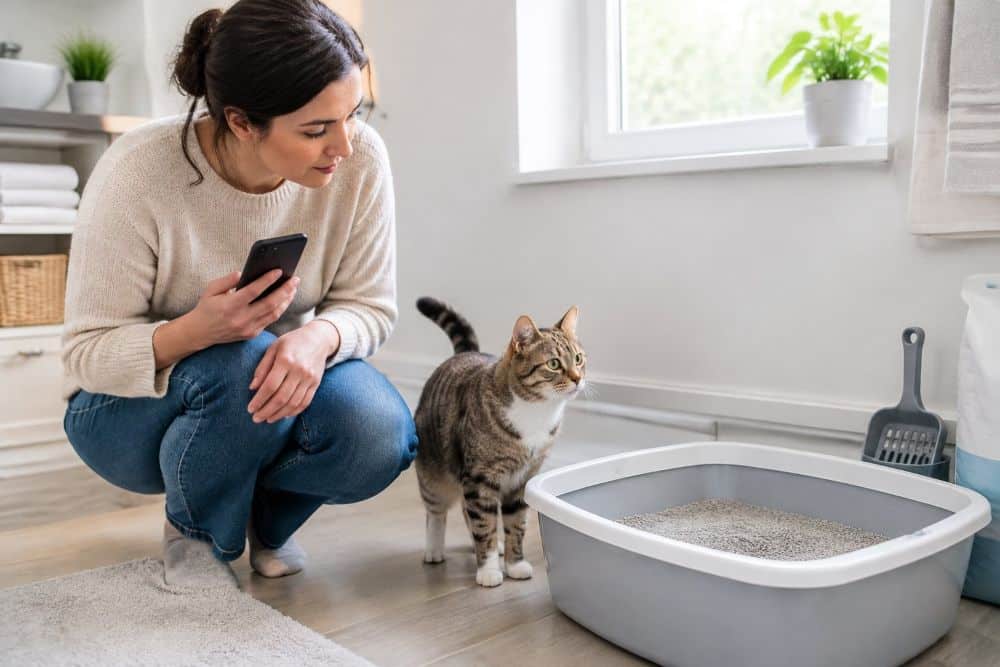
Watch how your cat positions themselves to defecate. Struggling to balance, crouching awkwardly, or crying out during the attempt are all reasons to schedule a visit rather than wait it out.
Constipation, Diarrhea, Blood, or Changes in Appetite
Stool changes alongside uncovered poop often point toward a digestive issue rather than a litter box preference. Hard, dry stool, watery diarrhea, visible blood, mucus, or a drop in appetite are all signals worth mentioning to your vet, since they can indicate anything from diet sensitivity to a more significant underlying condition.
Regular checkups catch many of these issues before they become severe. The guidance on how often you should take your cat to the vet↗ outlines appropriate visit frequency by life stage, which helps you stay ahead of issues like these rather than reacting after symptoms pile up.
How Can You Make Covering Easier and More Comfortable?
Making covering cat poop easier for your cat, starts with removing physical barriers, a bigger box, the right litter texture, a predictable clean schedule, and a calm location all reduce the reasons a cat might skip the step. None of these changes force a cat to bury waste, but they remove the obstacles that commonly get in the way.
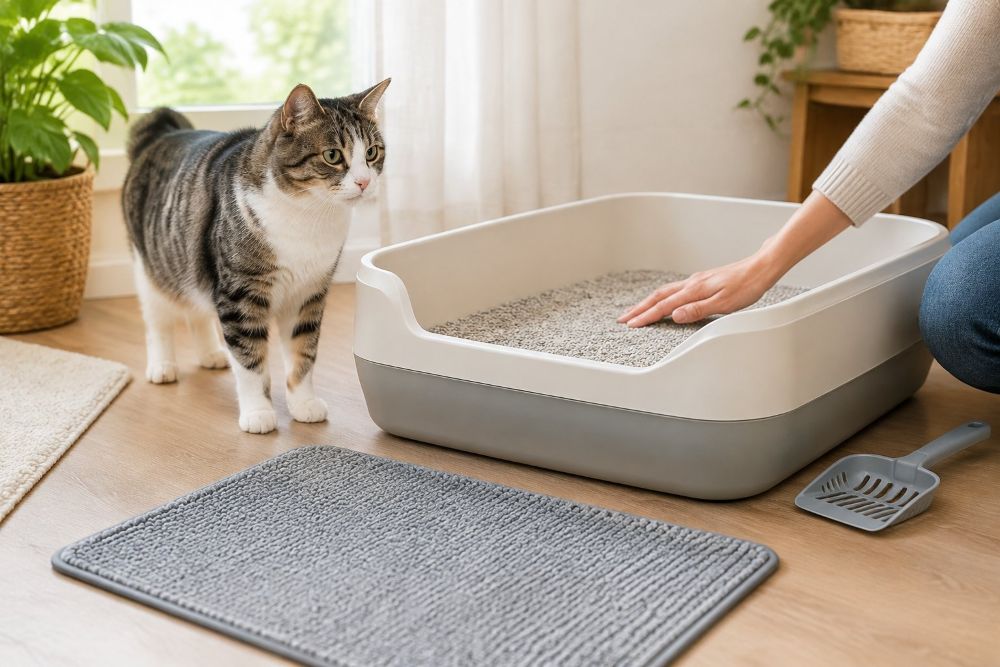
Offer a Roomy, Accessible Box With Suitable Litter
Choose a box at least one and a half times your cat’s body length so there’s room to turn and dig without bumping the walls. An extra large open top litter box↗ gives more cats the space to move freely during elimination.
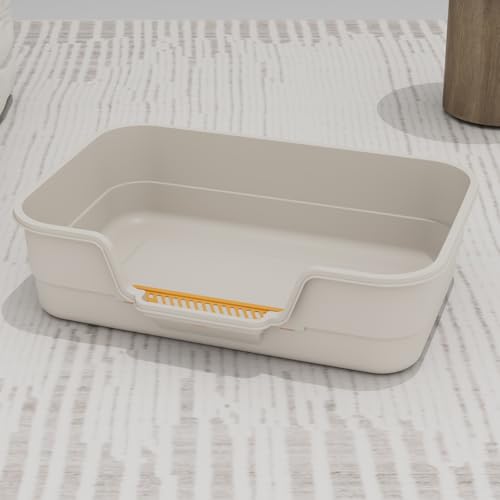
Litter texture matters too. Many cats prefer a soft, sand like texture over coarse or scented pellets, since it’s easier on sensitive paws and more natural to dig through.

Scoop Daily and Introduce Litter Changes Gradually
Scoop the cat litter box at least once a day, since a dirty box discourages the full digging and covering routine and can push cats toward using the floor instead. Daily scooping also lets you catch stool changes early, before they become harder to notice in a messy box.
When switching litter brands, mix the new litter in gradually↗ over a week or two rather than swapping all at once. Sudden changes in texture or scent can make a cat avoid digging altogether while they adjust.
Provide Quiet Locations and Separate Boxes for Multiple Cats
Place boxes in low traffic, quiet spots away from loud appliances or heavy foot traffic, giving your cat room to finish the whole routine without rushing. In multi cat homes, offer one box per cat plus one extra, each in a separate location.
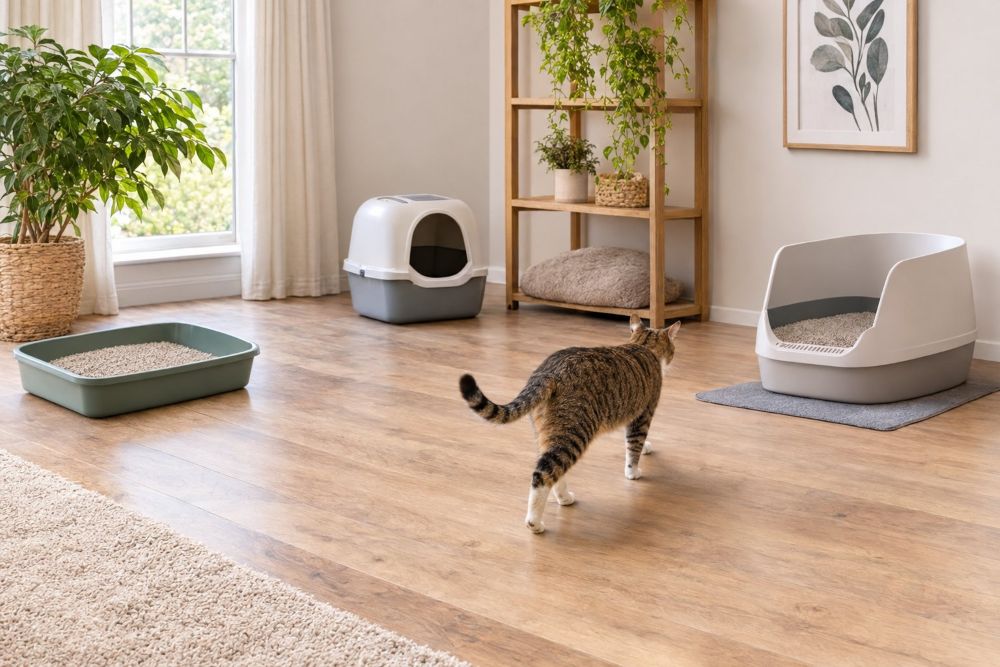
This reduces the social pressure that can come from one cat using a box recently visited by another. Covering behavior often improves once each cat has a predictable, low stress spot to use.
Encourage Natural Digging Without Punishment or Moving Your Cat’s Paws
Never physically move your cat’s paws to force digging or scold them for leaving waste uncovered. This creates stress around the litter box, which can make avoidance worse rather than better.
Instead, keep the cat litter layers deep enough↗ (around two to three inches) to make digging physically rewarding when your cat does attempt it.
Watch for Improvement Without Insisting Every Cat Must Bury
Track whether adjustments to the box, litter, or location change the behavior over a couple of weeks. Some cats will start covering again once the setup feels right, while others continue leaving waste exposed even in ideal conditions.
That outcome is fine. A common cat behaviors explained↗ resource can help you recognize which habits fall within a cat’s normal range versus which ones warrant more investigation.
Focus on Comfortable Toileting, Not Perfect Covering
The real goal is a cat who uses the box consistently and comfortably, not one who buries every deposit perfectly. Covering is a bonus, not a requirement for a healthy litter box routine.
Frequently Asked Questions
Why has my older cat stopped covering their poop?
Arthritis and general joint stiffness make digging physically harder for senior cats, even when their litter box habits were consistent for years. A keeping an elderly cat comfortable↗ approach that includes a lower-sided box can reduce the effort needed for the whole routine, and watching for other signs of a cat aging↗ helps you tell whether mobility is the main factor.
Is it normal for a kitten not to bury their poop?
Yes, kittens are still learning this behavior, which typically develops around 7 weeks of age according to the AAFP and ISFM house-soiling guidelines↗. Some kittens pick it up quickly by watching their mother, while others take longer or never fully adopt the habit as adults.
Does being male or female affect whether a cat covers poop?
Sex alone doesn’t reliably predict whether a cat buries waste, since the behavior depends more on individual learning, environment, and comfort than on being male or female. Household dynamics, like the presence of other cats, tend to influence the habit more than sex does.
Why does my cat scratch the litter box walls instead of covering poop?
This usually means your cat is going through the motions of covering its poop but missing the cat litter, often because the box is too small or they’re positioned awkwardly inside it. Try a larger box, since having more room to maneuver often resolves wall-scratching without any other changes needed.